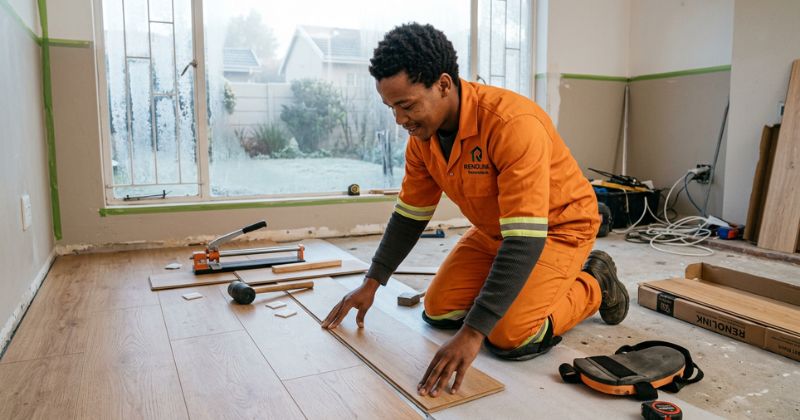
Absa’s internal personal loan data indicates that spending on home improvements represents 23.94% of all loans issued, reflecting a 9.6% year-on-year rise, particularly among consumers in lower Living Standards Measure segments.
Key Takeaways
- Rising Use Of Personal Loans For Housing: More South Africans are relying on personal loans to fund construction and renovations, despite these products not being designed for building-related costs.
- Higher Costs From Unsuitable Credit: Using unsecured personal loans often results in higher interest rates and tighter repayment terms, increasing the overall financial burden on borrowers.
- Shift Towards Tailored Financing Solutions: Partnerships like Absa and Cashbuild aim to provide more practical, accessible funding options by offering in-store finance aligned with real construction needs.
About Arcadia Finance
Find the right loan without the hassle at Arcadia Finance. Compare 19 trusted lenders, pay no application fees, and enjoy a smooth, reliable process built for you.
Rising Reliance on Personal Loans Drives Demand for Tailored Building Finance Solutions
A growing number of South Africans are turning to personal loans as a means to fund residential construction and renovation projects.
However, relying on this type of borrowing to meet housing and upgrade needs frequently leads to higher borrowing costs, as these loans are not specifically designed or priced for construction-related expenses.
In response to this challenge, Absa has formed a partnership with Cashbuild to roll out a specialised in-store financing solution, enabling customers to apply for funding at the exact point where they purchase building materials, with loan pricing tailored according to each individual’s financial profile.
Before taking out a personal loan for construction or renovations, borrowers should check whether a specialised building finance option is available, as these are often structured with more suitable repayment terms and potentially lower overall costs.

Pilot Rollout and Accessibility
The collaboration was officially launched at the Cashbuild Southgate branch and will initially be tested across 11 locations throughout South Africa. This offering is available to all customers, including those who do not hold an account with Absa.
Applicants can request financing directly in-store or via Absa’s call centre, with approvals potentially granted on the same day, subject to standard credit assessments and submission of the required documentation.
Concerns remain regarding homeowners who depend on personal loans that often come with restrictive repayment periods and elevated interest rates when funding their building or renovation plans. These concerns were highlighted by Vuyo Nohamba, Executive for Personal Loans at Absa Personal and Private Banking.
For individuals constructing homes on tribal or rural land, conventional mortgage financing is typically unavailable due to the absence of formal title deeds, leaving unsecured credit as the only viable option. For others undertaking general property improvements, selecting an appropriate financing solution remains equally important.
Informal Housing Economy and Structural Barriers
By December, it was estimated that approximately 90% of South Africans had built their homes incrementally, often brick by brick, without access to formal financing channels.
This informal housing activity represents an estimated property value of between R2 trillion and R3 trillion, significantly reshaping the property landscape in rural areas and townships. Notably, much of this development occurs without formal documentation such as title deeds, proof of income, or stable employment records.
The complexities surrounding township housing, communal land, and Reconstruction and Development Programme homes significantly reduce the likelihood of obtaining formal title deeds, according to informal sector expert GG Alcock.
By introducing financing at the point of purchase, the initiative aims to simplify the process and align more closely with how South Africans typically approach home construction.

A Simpler and More Practical Financing Model
The approach focuses on practicality and accessibility, allowing customers to apply for financing where they shop, with pricing customised to their financial situation. Funds are paid directly to the retailer for materials, while any remaining balance may be used for related expenses such as labour or delivery services.
Key features of the financing model include:
- No requirement for collateral
- No occupation-based eligibility restrictions
- Flexible allocation of remaining funds after material purchases
- Streamlined application process at point of sale
Borrowers should always compare the total cost of credit, including interest rates and fees, rather than focusing only on monthly repayments, as lower instalments can sometimes mask higher long-term costs.
Responding to Changing Housing Demand
The partnership aligns with Absa’s broader strategy of exploring new growth opportunities through strategic collaborations, particularly in response to evolving home ownership and renovation trends in South Africa.
According to Absa’s internal figures, home improvement accounts for 23.94% of all loans issued, with notable growth among lower-income segments.
Additionally, insights from the Absa Homeowner Sentiment Index for the fourth quarter of 2025 reveal that 78% of respondents are considering undertaking renovations. However, 37% report that they cannot afford to proceed, while 35% identify the cost of building materials as a significant barrier.
These statistics highlight strong demand for home improvements, coupled with considerable financial constraints faced by consumers.
Key Housing and Financing Challenges
| Challenge | Description |
|---|---|
| Lack of title deeds | Prevents access to traditional home loans |
| High cost of materials | Limits ability to renovate or build |
| Reliance on unsecured loans | Leads to higher interest rates |
| Informal income structures | Makes credit approval difficult |
In many township areas, multi-generational homes are expanded gradually over decades, often resulting in uniquely structured properties that differ significantly from formal housing developments.

Expanding Access to Housing Finance
Absa has reiterated its commitment to improving access to home ownership and better living conditions across all segments of society, particularly for households that build incrementally or operate within informal markets.
For families living on communal, tribal, or untitled land, traditional mortgage products remain largely inaccessible, often forcing reliance on expensive short-term lending options.
By designing financial products that reflect real-world building practices, the bank aims to broaden access to safer and more affordable housing solutions, while also supporting local construction ecosystems that are vital to community development.
New Property Finance Initiative
Separately, Rainmaker Marketing has announced the introduction of Rainmaker Marketing Property Finance through a collaboration with South Africa’s online home loan marketplace, MortgageMarket.
This initiative is intended to bridge the gap between buyer interest and successful bond approval, addressing a key inefficiency within the property market.
By integrating home loan facilitation directly into the property sales process, developers are better positioned to convert enquiries into completed transactions, while buyers gain a clearer understanding of their purchasing power at an earlier stage.
Prospective buyers should obtain pre-approval for a home loan before beginning property searches, as this improves negotiation power and reduces the risk of failed transactions.
Addressing the Gap Market
According to previous statements from Human Settlements representatives, South Africa’s property sector continues to face significant challenges in delivering accessible housing solutions for the so-called gap market.
These pressures are particularly evident in metropolitan areas, secondary cities, and smaller towns, where affordability constraints are most pronounced.
The persistence of these challenges contributes to the continued expansion of informal settlements, underscoring the urgent need for sustainable, long-term solutions.
Collaboration across the housing value chain, including partnerships between government, private sector stakeholders, traditional authorities, and non-governmental organisations, is viewed as essential to addressing these issues effectively.
Blended finance models, which combine public funding, private investment, and community participation, are increasingly being explored globally as a way to tackle housing shortages in emerging markets.

Conclusion
The increasing reliance on personal loans for home construction and renovations highlights a significant gap in South Africa’s housing finance landscape, particularly for those without access to formal mortgage options. While these loans offer immediate access to funds, their higher costs and unsuitable structures often place additional strain on already constrained households. The introduction of tailored, point-of-sale financing solutions marks a meaningful step towards aligning credit offerings with real-world building practices, potentially improving affordability and accessibility. However, broader collaboration across the public and private sectors will remain essential to address systemic barriers and ensure sustainable housing solutions for underserved communities.
Fast, uncomplicated, and trustworthy loan comparisons
At Arcadia Finance, you can compare loan offers from multiple lenders with no obligation and free of charge. Get a clear overview of your options and choose the best deal for you.
Fill out our form today to easily compare interest rates from 19 banks and find the right loan for you.