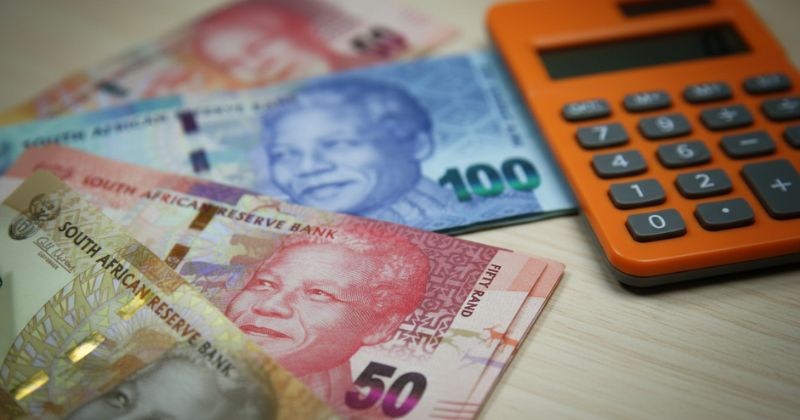
The South African rand has decisively powered past the R16.30-per-dollar barrier that had capped its gains during the previous week of trading, and is now advancing steadily towards what analysts increasingly regard as a fair-value level of around R16 to the dollar.
Key Takeaways
- Broad-Based Currency Strength Signals Confidence: The rand’s advance against the US dollar, pound sterling and euro points to improving investor confidence in South Africa rather than a temporary, dollar-specific fluctuation.
- Global Geopolitical Tensions Favoured The Rand: Heightened uncertainty driven by US foreign policy actions pushed investors towards safe havens such as gold, weakening the US dollar and indirectly supporting commodity-linked currencies like the rand.
- Technical Barriers Were Finally Overcome: Breaking through the long-standing R16.30 resistance level marked a significant psychological and technical milestone, opening the door for further rand appreciation in the near term.
About Arcadia Finance
Secure your loan with ease through Arcadia Finance. Compare offers from 19 reputable lenders, with no application fees and full compliance with South Africa’s National Credit Regulator requirements.
Global Turbulence, Safe-Haven Flows And The Rand’s Breakout Momentum
In early trade on Friday, the rand touched its strongest position in roughly three and a half years, firming to R16.09 against the US dollar. The local currency was last seen at comparable levels in June 2022, highlighting the scale and speed of its recent recovery.
Strength in the rand has not been limited to the dollar alone. The currency has also appreciated meaningfully against other major counterparts, trading at approximately R21.73 to the pound sterling and R18.91 to the euro, underscoring the broad-based nature of the rally.
A broad-based currency rally is generally seen as more sustainable than a move driven by a single exchange rate, as it reflects wider confidence rather than a narrow dollar-specific effect.

From Record Weakness To Renewed Strength
The rand’s performance builds on what was an unexpectedly resilient 2025. Over the course of that year, the currency benefited from a marked improvement in sentiment towards South Africa’s economic outlook, alongside a weakening US dollar driven by mounting global geopolitical tensions.
Earlier in 2025, the rand had traded at record weak levels above R19 to the dollar. However, by the final months of the year, the currency had staged a notable turnaround, ending 2025 comfortably below the R17-per-dollar mark.
At the start of 2026, this momentum carried through, with the rand pushing to three-year highs below R16.50. Even so, progress initially stalled at the R16.30 resistance level, which analysts viewed as a technically and psychologically significant hurdle.
Economists cautioned at the time that domestic markets would need a fresh catalyst and stronger momentum to decisively break through that level, particularly given a choppy and uncertain start to the year for global markets.
If you are wondering what actually drives the exchange rate, our guide on the dollar to rand exchange rate breaks down how global markets, interest rates and investor sentiment influence daily currency moves.
Global Turbulence And A Flight To Safety
While South African markets were relatively subdued and largely extending the positive tailwinds from late 2025, international markets were rocked by a series of geopolitical shocks.
Global volatility spiked following the United States’ military action in Venezuela and the increasingly confrontational rhetoric of US President Donald Trump regarding Greenland.
In the first week of the year, the United States launched what it described as a military intervention in Venezuela, resulting in the abduction of the country’s president, Nicolas Maduro, on allegations related to drug trafficking.
In subsequent weeks, Trump escalated tensions further by threatening US action to seize control of Greenland by force if necessary, while the White House also warned of additional tariffs against European countries that failed to align with US positions.
Faced with the prospect of major shifts in the global order and growing concern over superpowers acting outside established norms, investors moved aggressively into traditional safe-haven assets.
One of the clearest beneficiaries of this shift was gold, which surged to fresh record highs amid Trump’s intensifying standoff with European governments.
Periods of geopolitical instability often weaken the US dollar, as investors diversify away from US assets and into commodities such as gold, which are priced globally and viewed as stores of value.
This environment proved supportive for commodity-linked currencies, helping to lift the rand to around R16.29 per dollar and finally breaking through the long-standing resistance level.
According to ETM Analytics, the broader rotation away from US assets is likely to remain favourable for the rand.
“The ongoing rotation out of US assets into gold will ensure that the USD is hamstrung and that commodity currencies such as the rand do well,” the firm noted.
The rand has seen dramatic swings over the years. Our overview of the history of the South African rand shows how political shifts, global crises and commodity cycles have shaped its long term journey.

Rand Is Pushing Even Higher
Positive momentum for the rand continued into the following week.
After high-level discussions at the World Economic Forum in Davos, the Trump administration appeared to soften its previously aggressive stance on Greenland and signalled a willingness to de-escalate the emerging tariff conflict with Europe.
This shift brought a measure of calm back to global financial markets, encouraging a return to risk-taking behaviour and boosting demand for emerging-market assets.
As a result, the rand strengthened further, trading at around R16.10 to the dollar in early sessions on Friday, 23 January.
This places the currency within striking distance of Investec’s purchasing-power-parity valuation of R16.00 to the dollar.
Purchasing power parity estimates compare what a basket of goods costs in different countries and can offer a long-term guide to whether a currency is overvalued or undervalued.
Domestic Fundamentals Lend Support
The rand’s advance is not being driven solely by global factors. Domestic developments have also played a critical role in underpinning positive sentiment towards South Africa.
The country was removed from the Financial Action Task Force grey list in October 2025, signalling improved compliance with international financial standards. This was followed by the presentation of a credible and well-received medium-term budget in November.
In a significant milestone, South Africa also secured its first sovereign credit rating upgrade in two decades, marking a turning point after years of downgrades.
Inflation remains subdued and well contained within the target range of the South African Reserve Bank, and the interest-rate cycle has shifted decisively towards easing, further supporting economic activity.
International institutions have also adopted a more optimistic stance. Both the International Monetary Fund and the World Bank have revised their growth forecasts higher.
| Year | Expected GDP Growth |
|---|---|
| 2024 | 0.6% |
| 2025 | 1.3% |
| 2026 | 1.4% |
| 2027 | 1.5% |
The institutions project economic growth of 1.3% in 2025, more than double the estimated pace of 2024, albeit from a low base. Growth is expected to rise further to 1.4% in 2026 and 1.5% in 2027.
While these forecasts remain modest compared with those of other emerging markets and many Sub-Saharan African peers, they represent a meaningful improvement for an economy long constrained by an energy crisis and deteriorating infrastructure.
Risks That Still Cap The Rand
Despite the improved outlook, persistent structural challenges continue to weigh on the rand and prevent it from fully reflecting its theoretical fair value.
Key risk factors include:
- High levels of government debt
- Slow and uneven progress on economic reforms
- Elevated unemployment
- Policy uncertainty and perceptions of an unfriendly business environment
These issues contribute to a sizeable risk premium embedded in the currency.
Alternative valuation models reinforce the view that the rand remains undervalued. Measures such as the widely cited Big Mac Index suggest the currency should trade between R11.30 and R14.30 to the dollar on a purchasing-power-parity basis, highlighting the extent of the gap that still exists.

Conclusion
The rand’s decisive move to multi-year highs reflects a convergence of supportive global and domestic dynamics, with geopolitical uncertainty undermining the US dollar, safe-haven flows boosting commodities, and improved sentiment towards South Africa reinforcing demand for the local currency. While external shocks played a meaningful role in weakening the dollar, the rand’s ability to break through key technical levels suggests that confidence has broadened beyond short-term trading effects. Taken together, these factors indicate that the currency’s recent strength is not merely a temporary spike, but part of a more sustained re-rating, provided that both global risk appetite and local economic credibility remain intact.
Fast, uncomplicated, and trustworthy loan comparisons
At Arcadia Finance, you can compare loan offers from multiple lenders with no obligation and free of charge. Get a clear overview of your options and choose the best deal for you.
Fill out our form today to easily compare interest rates from 19 banks and find the right loan for you.