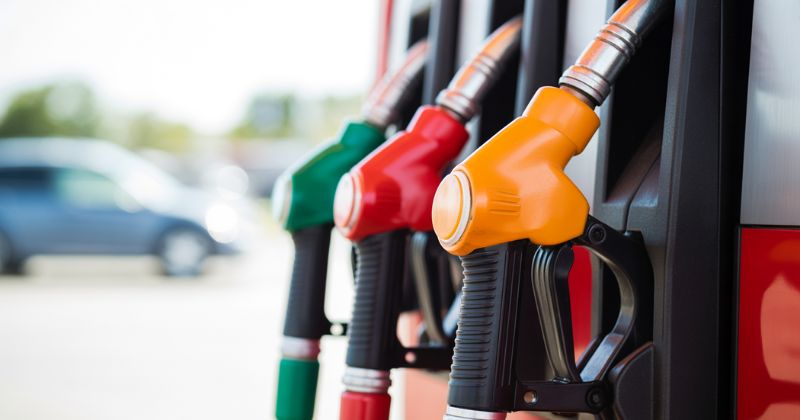
South African motorists are facing another difficult start to the month as fresh data from the Central Energy Fund indicates that fuel prices are set to climb again next week. The latest month-end assessment shows a clear tilt towards increases across both petrol and diesel, suggesting that drivers will soon feel additional strain at the pumps.
Key Takeaways
- Fuel under-recoveries are intensifying: Both petrol and diesel remain in under-recovery territory, signalling strong upward pressure on December pump prices.
- Diesel volatility poses broader economic risks: Large diesel under-recoveries could push up transport and food costs early next year due to its central role in freight and agriculture.
- Short-term relief is unlikely despite minor improvements: Although diesel recoveries have narrowed slightly, the gains are not enough to offset overall global oil-price increases.
About Arcadia Finance
Apply for a loan confidently through Arcadia Finance. Pay no application fees and choose from 19 reputable lenders registered with the National Credit Regulator. Experience a smooth, reliable borrowing journey.
Under-Recoveries Deepen as Fuel Costs Face Upward Pressure
Throughout November, under-recoveries for petrol and diesel accumulated steadily, and even the appreciation of the rand was not sufficient to offset climbing international oil prices. The CEF’s calculations point to a persistent mismatch between current selling prices and actual market values, hinting at unavoidable upward adjustments. As a reminder, the South African fuel-price formula is heavily influenced by international product prices, which means that even a strong rand cannot fully shield motorists when oil supply tightens globally.
Petrol has been tracking an under-recovery in a relatively narrow range of roughly 20 to 26 cents per litre, signalling modest but still notable pressure on consumer budgets. Diesel, which has been far more volatile due to global supply dynamics, reflects an even larger under-recovery, sitting between approximately 76 and 93 cents per litre. Diesel volatility often impacts food prices in the months that follow because freight and agricultural machinery rely on it, so the upcoming increase could affect grocery inflation early next year.
While petrol under-recoveries have shown little variation over the past seven days, the situation for diesel has improved somewhat, with recoveries narrowing by about 15 cents per litre. This easing, however, remains insufficient to prevent a significant price increase. Diesel price improvements are sometimes linked to seasonal dips in European heating demand, but analysts caution that this effect is rarely long lasting.
Rising fuel costs feed directly into broader price pressures across the economy, making it essential to understand what inflation is and how it affects everyday spending. Transport fuel remains one of the most powerful drivers of consumer inflation in South Africa.

Forecast Adjustments for December
The projections for the start of December indicate that several fuel categories will experience upward adjustments, continuing the pattern seen in recent months. Based on late-November modelling, motorists can expect the following estimated changes:
| Fuel Type | Projected Change | Reason for Adjustment |
|---|---|---|
| Petrol 93 | +20 cents per litre | Driven by international pricing trends |
| Petrol 95 | +26 cents per litre | Stronger product-price movements |
| Diesel 0.05 percent (wholesale) | +60 cents per litre | Ongoing pressure on global distillate markets |
| Diesel 0.005 percent (wholesale) | +77 cents per litre | Higher costs for lighter diesel components internationally |
| Illuminating paraffin | +68 cents per litre | Rising international prices affecting households reliant on paraffin |
Despite the rand maintaining a significantly stronger average level compared to October, the rising cost of global petroleum products overshadowed those exchange-rate gains. The currency’s contribution to price formation currently reflects a mild over-recovery of around 4 cents per litre, yet international product prices remain the dominant force, creating between 24 and 81 cents per litre in under-recoveries depending on the fuel grade.
Fuel experts often note that even a 10 to 20 cent under-recovery sustained across several weeks typically guarantees a price increase, so current levels leave little room for relief.
The rand has held comparatively firm since the medium-term budget policy statement, although it has backed away from the sub-R17 to the dollar threshold reached immediately after the announcement. Historically, the rand tends to weaken during global uncertainty because investors favour safe-haven currencies such as the US dollar and Swiss franc.
Fuel hikes do not only affect drivers, as the broader cost of travel in South Africa rises through higher taxi fares, bus prices and delivery costs. These increases ripple through the economy, raising the cost of goods and services.
Rand Movements and Market Reactions
Following the budget review, the currency briefly strengthened to around R16.97 to the dollar after benefitting from improved domestic sentiment and supportive signals from international ratings agencies. This upswing was aided by a period of broader dollar softness, which temporarily boosted emerging-market currencies. Currency strategists often highlight that these short-lived bursts of strength typically reflect sentiment rather than structural economic improvement.
However, the rand soon retreated from those stronger levels as international markets shifted away from risk-oriented assets when delayed United States economic data created uncertainty. This change in appetite caused the local unit to settle back into its earlier trading band. This behaviour mirrors a common phenomenon known as risk-off rotation, which can cause sudden capital outflows from developing economies.
For most of the period since the mini-budget, the rand has fluctuated within a narrow range of roughly R17.15 to R17.35 to the dollar. This stability, while welcome, has offered only limited relief to fuel pricing, which explains the relatively modest 4-cent over-recovery recorded for the exchange-rate component.
Despite this constrained movement, analysts note that South Africa’s broader economic prospects appear slightly more promising than anticipated, even as global geopolitical risks persist and relations with the United States continue to face strain. A stable rand does tend to help moderate inflation, although fuel-related inflation remains largely outside domestic control.
International Oil Markets Under Scrutiny
Global oil markets have experienced pronounced swings in November due to competing concerns about supply, demand, and heightened geopolitical tension, particularly involving the United States and Russia. These market disturbances have pushed oil prices higher, with current levels sitting near 63 US dollars a barrel, well above the average recorded in October. The 60 to 70 dollar range is historically considered neutral territory for oil, but volatility within this range can still dramatically affect fuel-importing countries like South Africa.
Traders have been adjusting their forecasts in response to shifting expectations around the output decisions of the OPEC Plus alliance and the uncertain pace of demand recovery from major economies such as China. Brent crude has declined by about 15 percent since the start of the year, largely because markets expect an oversupply after OPEC Plus eased constraints and producers outside the group increased their own output.
A global oil surplus is now projected to reach around 2.8 million barrels per day next year and roughly 2.7 million barrels per day by 2027, according to estimates circulated by JPMorgan Chase. These expectations have contributed to downward pressure on prices earlier in the year, although current geopolitical tensions have recently driven costs upward again.
Oil surpluses often push prices down, but the effect is sometimes delayed due to shipping bottlenecks, refinery capacity limits, and long-term contracts that lock in older prices.

Possible Impact of Shifts in Russia’s Oil Supply
A significant unknown factor is how Russian oil supply might shift if the conflict in Ukraine approaches a negotiated pause or settlement. Increasing diplomatic pressure from the United States for Russia to end the conflict could reshuffle global supply patterns, particularly if sanctions are eased and currently restricted oil flows re-enter the market.
Analysis from international market observers indicates that Russian producers are already showing signs of strain, with field storage levels rising to more than 16 million barrels. This level has only been recorded twice since the beginning of the conflict in 2022 and suggests that sanctions are constraining their ability to move crude to global buyers. Increases in field storage often act as early warning signals that a country is struggling to maintain export volumes.
Russia remains one of the largest oil producers in the world, and many of its exports are still subject to stringent Western restrictions. Should any agreement lead to the relaxation of sanctions, large volumes of Russian oil could quickly be redirected to markets such as China, India, and Turkey. This potential shift would have sweeping consequences for global pricing.
Nevertheless, analysts caution that any form of peace arrangement would require extensive negotiations, and there remains considerable uncertainty around how Russia’s accumulated oil stockpiles would be released into the market. Despite these unknowns, the broader trend for November has been one of increased international petroleum prices compared to October, directly contributing to the under-recoveries shaping local fuel price outcomes. Global oil markets tend to react to geopolitical headlines within hours, even if real supply changes take months to materialise.

Official Announcement Approaching
South Africa’s Department of Mineral Resources and Energy is expected to confirm the official fuel price adjustments shortly before they come into effect on Wednesday, 3 December 2025. Motorists and businesses will be watching closely, as the projected increases are likely to place additional pressure on household budgets and transport-related costs at a time when economic conditions remain fragile. Households can soften the impact of rising fuel costs by keeping tyres properly inflated, removing excess vehicle weight, planning combined trips rather than multiple short journeys, and avoiding aggressive acceleration which increases petrol consumption.
Conclusion
The latest under-recovery data highlights a challenging period ahead for motorists and the broader economy, with both petrol and diesel poised for increases due to persistent global oil-price pressures and only limited support from the rand. The slight improvement in diesel recoveries offers minimal relief, as international market conditions continue to outweigh local currency gains. With rising fuel costs feeding into transport and food inflation, consumers and businesses alike should brace for further financial strain as December approaches.
Fast, uncomplicated, and trustworthy loan comparisons
At Arcadia Finance, you can compare loan offers from multiple lenders with no obligation and free of charge. Get a clear overview of your options and choose the best deal for you.
Fill out our form today to easily compare interest rates from 19 banks and find the right loan for you.