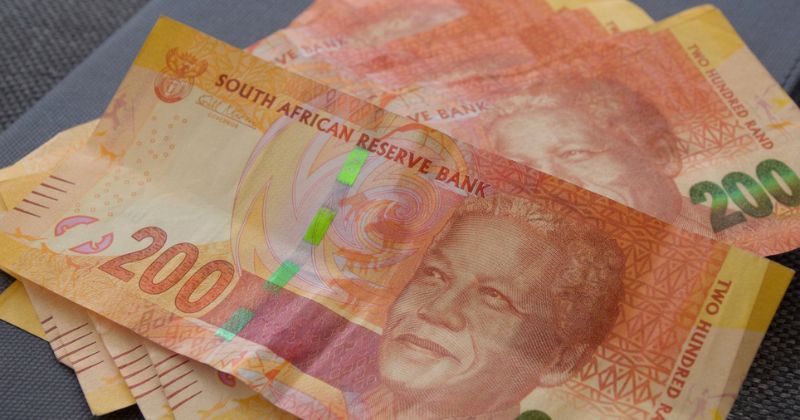
The South African rand has come under renewed pressure as global financial markets adopt a cautious stance ahead of a critical geopolitical deadline tied to escalating tensions between the United States and Iran.
Key Takeaways
- Rand Faces Volatility as US-Iran Deadline Looms: Markets remain cautious as geopolitical tensions threaten to weaken the rand and increase financial uncertainty.
- Oil Prices and Fuel Costs Pose Inflation Risk: Elevated oil prices and large fuel under-recoveries could drive higher food, transport, and household expenses.
- Longer Conflict Raises Economic Pressure: Extended disruptions to the Strait of Hormuz may weaken the rand further and slow South Africa’s fragile recovery.
About Arcadia Finance
Apply for your loan with ease through Arcadia Finance. Pay no application fees and compare offers from 19 trusted, NCR-compliant lenders, all in one simple process.
Deadline Approaches as Markets Turn Cautious
Approximately ten days prior, United States President Donald Trump issued a deadline for Iran to reopen the strategically important Strait of Hormuz, warning that failure to comply would result in severe consequences for the country.
The Strait of Hormuz is widely recognised as one of the most critical global shipping routes, responsible for transporting a significant share of the world’s oil supply, making any disruption highly consequential for global energy markets.
Roughly one-fifth of the world’s oil supply passes through the Strait of Hormuz, making it one of the most strategically sensitive waterways globally.
Over the Easter weekend, Trump reiterated his warning to Iran, emphasising that time was running out and highlighting the approaching deadline set for 20h00 on Tuesday, 7 April, Washington time, which corresponds to 02h00 South African Standard Time.
Financial markets have now entered a waiting period, with the deadline only hours away, creating heightened uncertainty and risk-averse behaviour among investors.

Rand Holds Steady but Pressure Builds
According to Investec Chief Economist Annabel Bishop, the South African rand has experienced pressure in recent days, although it has remained relatively stable around R16.90 against the US dollar over the past week.
The currency’s relative stability reflects a temporary pause in volatility, as investors hold positions and await further developments linked to geopolitical tensions.
However, this period of calm is not expected to continue, with future currency movements likely to depend heavily on developments following the deadline.
Possible Market Reactions
Should tensions escalate further, financial markets are expected to react rapidly, potentially triggering:
- Increased oil prices
- A weaker rand against the US dollar
- Rising inflation pressures
- Increased interest rate risks
- Higher fuel costs
Historically, geopolitical conflicts involving oil-producing regions have resulted in rapid increases in fuel costs and currency volatility.
Trump reportedly continued to escalate rhetoric through social media, warning of severe consequences and suggesting further intensification of the conflict if Iran does not comply.
Such developments are expected to place additional pressure on global energy prices, which in turn would likely weaken the South African rand and contribute to rising inflation.
Oil Prices Already Elevated
Oil prices have already moved higher amid the growing tensions, with Brent crude trading above $110 (around R1 870) per barrel and averaging around $107 (around R1 820) so far this month, based on a recent exchange rate of roughly R16.98 to the US dollar.
These elevated prices have contributed to a significant under-recovery in local fuel pricing, currently estimated at:
| Fuel Type | Under-Recovery Estimate |
|---|---|
| Petrol | R4.70 per litre |
| Diesel | Over R13 per litre |
Diesel prices in particular pose a significant risk to inflation, as they directly affect transport, logistics, and agricultural production costs.

South Africans Will Feel the Impact
Rising fuel costs are expected to affect South Africans directly at retail level, particularly through higher food prices and transport costs.
Food production in South Africa relies heavily on diesel for:
- Harvesting crops
- Planting operations
- Transporting produce
- Running irrigation equipment
Diesel costs account for nearly 20 percent of agricultural production expenses, making fuel price increases particularly impactful for food prices.
Grain production is especially sensitive to diesel costs because of large-scale mechanised farming.
Margins in the agricultural sector are already tight, limiting producers’ ability to absorb additional cost increases.
Retailers are also expected to face pressure, with limited ability to absorb rising costs, meaning price increases will likely be passed on to consumers.
What Consumers Could Expect
- Higher grocery bills
- Increased transport costs
- Rising delivery fees
- Possible interest rate pressure
- Reduced disposable income
Food inflation typically lags fuel price increases by several weeks, meaning consumers may only feel the full impact later.
War Duration Remains Critical
Economists have emphasised that the path forward depends largely on how long the conflict continues and whether the Strait of Hormuz remains partially or fully disrupted.
The longer the disruption continues, the more sustained the pressure on oil prices, global markets, and emerging market currencies such as the rand.
This uncertainty also increases the likelihood of a prolonged risk-off environment in global financial markets.
A risk-off environment refers to investors moving funds from higher-risk assets such as emerging markets into safer investments like US government bonds.
Rand Outlook Scenarios
Investec’s modelling outlines several possible scenarios for the rand:
| Scenario | Key Points |
|---|---|
| Base Case Scenario | • Rand averages around R16.90 in the second quarter • Strengthens toward R16.20 by year end • Assumes tensions do not escalate further |
| Lite Down Case Scenario | • Rand weakens toward R18.60 by year end • Driven by inflation, weak growth, and local factors • Not directly dependent on geopolitical escalation |
Emerging market currencies often weaken when inflation rises and economic growth slows.

Broader Economic Risks
The longer the conflict continues, the greater the risk of negative spillover effects for South Africa’s economy.
South Africa remains particularly vulnerable to global shocks due to:
- High reliance on fuel imports
- Weak economic growth
- Persistent inflation risks
- Currency volatility
South Africa imports the majority of its oil, making the country particularly exposed to global price movements.
Annabel Bishop has previously warned that an extended conflict in the Middle East could undermine South Africa’s fragile economic recovery.
The economy has only recently begun emerging from years of stagnation, making it more vulnerable to external shocks.
What South Africans Can Do Now
These practical steps may help households manage rising costs:
- Reduce non-essential travel
- Consider carpooling or public transport
- Monitor fuel price announcements
- Adjust household budgets early
- Stock up on essentials before price increases
Small adjustments made early can help households absorb rising costs more effectively.
Conclusion
The South African rand faces a pivotal moment as global markets await developments tied to escalating tensions between the United States and Iran. With oil prices already elevated and fuel under-recoveries widening, the risk of rising inflation and a weaker rand is increasing. The duration and severity of the conflict will ultimately determine the scale of economic impact, but early signs suggest South Africans may soon face higher food prices, increased fuel costs, and renewed pressure on household finances.
Fast, uncomplicated, and trustworthy loan comparisons
At Arcadia Finance, you can compare loan offers from multiple lenders with no obligation and free of charge. Get a clear overview of your options and choose the best deal for you.
Fill out our form today to easily compare interest rates from 19 banks and find the right loan for you.