
South Africa’s corporate sector is currently enduring extreme and sustained financial pressures across multiple fronts, even as the most recent data released by Statistics South Africa (Stats SA) points to a year-on-year decline in the overall number of business liquidations recorded across the country.
Key Takeaways
- The numbers don’t reveal the full picture: Whilst South Africa’s overall liquidation figures are trending downward, Coface warns that corporate financial distress is actually rising – meaning the true scale of the crisis is far worse than the headline statistics suggest.
- SMEs are the most vulnerable: Small and medium-sized businesses in sectors like trade, real estate, and accommodation are being squeezed from all sides – high interest rates, weak demand, and a single unpaid invoice from a large debtor can be enough to push an otherwise viable business under.
- Government payment failures are crippling construction: Chronic non-compliance with the legally mandated 30-day payment rule is forcing contractors to self-finance government projects, putting smaller firms at serious risk of collapse across an industry that supports 1.2 million jobs.
About Arcadia Finance
Your financial future deserves a lender you can trust. With Arcadia Finance, you get access to 19 reputable, NCR-compliant lenders, zero application fees, and a simple process designed around your needs and not theirs.
Understanding the Liquidation Data – What the Numbers Really Mean
The liquidation data published by Stats SA is particularly nuanced in its composition and should therefore not be viewed in isolation, as the vast majority of liquidations recorded are in fact voluntary in nature rather than being forced upon businesses by external parties.
When assessing the true health of a country’s corporate sector, economists and financial analysts typically focus on compulsory liquidations rather than voluntary ones, as the latter can often reflect strategic business restructuring rather than outright failure.
A considerably more meaningful and telling measure is the tracking of compulsory liquidations specifically – these are instances where businesses are forced to close their doors following a court-ordered process that has been initiated by creditors or other stakeholders on the grounds of insolvency or serious operational failure.
The February 2026 data painted a more detailed picture when broken down by liquidation type:
| Liquidation Type | February 2025 | February 2026 | Change |
|---|---|---|---|
| Voluntary Liquidations | 126 | 127 | +0.8% (relatively flat) |
| Compulsory Liquidations | 14 | 8 | -42.9% (decline) |
| Total Liquidations | 140 | 135 | -3.6% |
The data further indicated that liquidations involving close corporations declined during the period under review, whilst company liquidations experienced a slight increase in comparison.

Distress Beneath the Surface – The Coface Warning
Credit insurance and risk management firm Coface has cautioned that whilst the formal liquidation figures may be trending downward, the number of corporations operating under significant financial distress continues to rise at an alarming rate – a warning that suggests the headline statistics may be masking a far deeper and more widespread problem within South Africa’s economy.
Coface identified several key factors that are collectively driving businesses toward financial difficulty, reflecting the cumulative burden of a challenging macro-economic environment:
- High interest rates eroding borrowing capacity and increasing the cost of debt servicing
- Weak consumer and business demand suppressing revenue generation across sectors
- Infrastructure constraints – particularly persistent electricity outages and port inefficiencies – disrupting operations and increasing costs
- Logistical challenges hampering supply chains and delivery timelines
- External pressures, including global economic headwinds and commodity price volatility
South Africa’s repo rate, set by the South African Reserve Bank (SARB), directly influences the interest rates that businesses pay on loans. Monitoring SARB Monetary Policy Committee (MPC) announcements is essential for businesses planning their cash flow.
Coface noted that these combined pressures continue to erode profit margins and restrict cash flow across the corporate sector, with the pain felt most acutely by small and medium-sized enterprises (SMEs) that lack the financial buffers of larger corporations.
Sectors Most at Risk
Coface identified that sectors which are more fragmented in structure and those that contain a large population of SMEs tend to account for a disproportionately significant share of total liquidations. The sectors most prominently affected include:
- Finance, insurance, and real estate services
- Business and professional services
- Trade and retail operations
- Catering and accommodation services
Debt and Late Payments Remain an Achilles Heel
Unpaid invoices and deliberately delayed payment practices remain one of the most significant and damaging root causes of business failure across South Africa, as the default of a single large debtor – whether a private sector client or a government department – has the capacity to place otherwise financially viable and well-managed businesses under severe and potentially insurmountable financial strain.
Businesses can protect themselves from debtor default through credit insurance products, which cover outstanding invoices in the event that a client fails to pay. This is particularly useful for SMEs that may have significant exposure to one or two large clients.
These payment failures and delays have the effect of dramatically accelerating the path to liquidation for many businesses, even in circumstances where the root cause of the cash flow crisis was entirely beyond the control of the affected company. Risk management tools – such as trade credit insurance and debtor monitoring services – can prove enormously valuable to businesses that are already operating under financial pressure.
Abdul Vally, CEO of Coface South Africa, emphasised that in periods of economic strain, businesses that actively take steps to protect their income streams and manage their credit exposure are far better positioned to survive challenging conditions and subsequently recover when the environment improves.
Although the February 2026 liquidation figures indicated a modest improvement on a year-on-year basis, a broader review of economic indicators reveals an environment of deeply fragile business confidence amid an exceptionally challenging and uncertain economic climate.
South Africa’s Construction Sector – A Case Study in Crisis
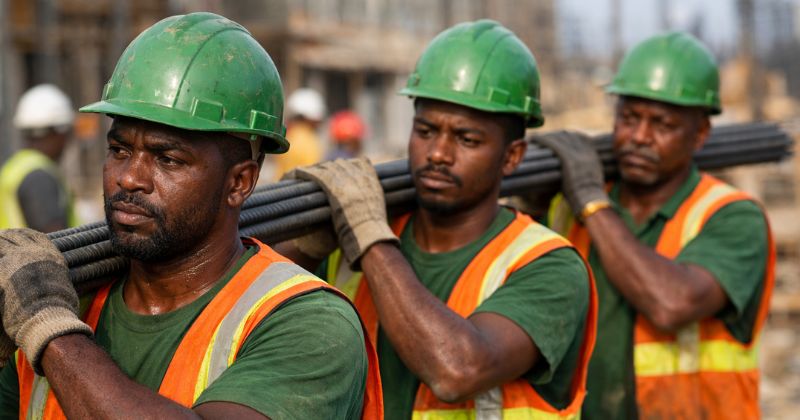
One sector that is facing particularly severe operational challenges at present is South Africa’s construction sector – an industry that, despite being one of the largest employers in the country, is being systematically undermined and destabilised by chronic and persistent late payment of invoices by government departments and state entities.
This assessment comes from Euan Massey, a director at construction law specialists MDA Attorneys, who has observed that contractors across the sector are increasingly being compelled to finance the completion of government-awarded projects entirely out of their own financial resources – a situation that is fundamentally unsustainable for most businesses.
The scale of the sector’s importance to South Africa’s economy and social fabric makes the payment crisis all the more alarming:
- The construction sector employs 1.2 million people across South Africa
- Data from the National Treasury reveals a worsening late-payment crisis among national and provincial government departments
- Legislation requires government departments to settle invoices within 30 days – a requirement that is being widely ignored
Contractors working on public sector projects in South Africa can formally report late payments to the relevant government department’s accounting officer, and in serious cases, escalate complaints to the Office of the Auditor-General or the relevant Premier’s office. Knowing these escalation routes can be the difference between recovering payment and writing off a debt.
Contractors Left to Their Own Devices
Massey noted that the problem of late payment is especially widespread throughout the construction industry when public sector projects are concerned, where non-compliance with the 30-day payment obligation is common and largely goes unchallenged despite clear legislative provisions designed to protect service providers.
Massey further observed that contractors are effectively being left entirely to their own devices when it comes to pursuing and collecting money owed to them by government clients, and are being forced to be increasingly creative and innovative in finding ways to recover outstanding amounts – a burden that draws management attention and resources away from productive business activity.
The warning issued by Massey is stark – this situation is having a disastrous and potentially irreversible impact on smaller construction firms that simply do not possess the financial reserves, borrowing capacity, or cash flow resilience required to carry out lengthy projects for extended periods whilst awaiting payment from the state.
The South African government’s 30-day payment rule for suppliers is enshrined in Treasury Regulation 8.2.3, issued under the Public Finance Management Act (PFMA). Despite this legal obligation, the National Treasury’s own reports have repeatedly flagged widespread non-compliance by government departments across the country.

Conclusion
South Africa’s corporate sector is caught in a slow-burning crisis that goes far deeper than the official liquidation figures suggest. Whilst modest improvements in the headline numbers may offer a superficial sense of relief, the reality on the ground – rising financial distress among SMEs, chronic late payments from government departments, and compounding pressures from high interest rates and weak demand – paints a far grimmer picture. Until systemic issues such as infrastructure failures, public sector payment compliance, and access to risk management tools are meaningfully addressed, South Africa’s businesses, particularly its smallest and most vulnerable, will continue to bear the weight of an economic environment that remains deeply hostile to survival and growth.
Fast, uncomplicated, and trustworthy loan comparisons
At Arcadia Finance, you can compare loan offers from multiple lenders with no obligation and free of charge. Get a clear overview of your options and choose the best deal for you.
Fill out our form today to easily compare interest rates from 19 banks and find the right loan for you.