
The rand and local financial markets have opened the new trading week on a weaker footing, battered by the prolonged Iran War and mounting inflation fears. While the local currency has held within a relatively resilient range in recent months, that range has drifted higher, with Investec Chief Economist Annabel Bishop placing it between R16.45 and R17.05 to the dollar. By 15h40 on Monday, 18 May, the rand was trading at R16.59 to the dollar, R22.21 to the pound sterling, and R19.33 to the euro. Bishop noted that risk aversion tied to the oil price shock continues to drag on the rand, leaving it in the bottom third of emerging market currencies since the war began.
Key Takeaways
- Rand under sustained pressure: The rand has weakened within a higher trading range of R16.45 to R17.05 to the dollar, sitting in the bottom third of emerging market currency performance since the Iran War began.
- South Africa’s growth outlook deteriorating: GDP growth forecasts for 2026 have been cut to as low as 1.0% year on year by the IMF, down from 1.6% in March, as fuel-driven inflation embeds itself as a lasting economic headwind.
- Interest rate cuts off the table: The outlook has flipped dramatically, with economists now expecting as many as three 25-basis-point hikes before the end of 2026, which will raise borrowing costs for households and businesses alike.
About Arcadia Finance
Get the financing you need with ease through Arcadia Finance. Pay no application fees and compare offers from 19 trusted lenders, all registered and compliant with South Africa’s National Credit Regulator. Enjoy a fast, reliable process designed around your financial goals.
South Africa’s Economic Outlook Dims
For South Africa specifically, the continuing war in the Middle East has delivered a significant and measurable negative impact on local markets, with higher inflation now firmly embedded as a forecast trend going forward.
This inflationary pressure is a direct consequence of substantially elevated fuel prices stemming from the conflict and, critically, the closure of the Strait of Hormuz – one of the world’s most strategically vital oil shipping corridors.
Roughly 20% of the world’s total oil supply passes through the Strait of Hormuz. Any disruption to this narrow waterway between Iran and Oman has an outsized effect on global oil prices.
Growth Forecasts Cut
The economic growth outlook for South Africa has also deteriorated materially. Economic growth expectations for 2026 have been revised downward to 1.3% year on year, from a prior forecast of 1.6% year on year recorded in March, according to Bloomberg data. Other forecasting institutions are even more pessimistic, with the International Monetary Fund projecting growth of just 1.0% year on year for the same period.
The interest rate outlook has undergone a dramatic reversal as well. Economists have swung sharply from expectations of interest rate cuts at the start of the year to now pricing in as many as three separate 25-basis-point hikes before the end of 2026.

Inflation Data Due Wednesday
Statistics South Africa is scheduled to release April inflation data on Wednesday, with analysts polled by Reuters anticipating that the headline figure will accelerate to 3.9% year on year – a notable jump from 3.1% recorded in March. Analysts have issued warnings that domestic inflation could climb as high as 5% in the event that oil prices remain buoyant and the rand depreciates further from current levels.
Pressure at the Pumps
The ongoing tensions in the Middle East are also clouding the prospects for any meaningful and sustained fuel price relief at the pump for South African consumers and businesses alike.
With oil prices averaging close to 90 US dollars per barrel for the year to date, any sustained pricing above 100 US dollars per barrel will gradually push the annual average higher, placing further upward pressure on local fuel costs.
South Africa’s fuel prices are adjusted monthly by the Department of Mineral Resources and Energy, based on international oil prices, rand-dollar exchange rates, and the so-called Basic Fuel Price (BFP) mechanism.
The Central Energy Fund is currently reporting an over-recovery – meaning a likely price cut – for diesel in June. This over-recovery has been driven by falling international gasoil futures and a reported easing of global demand. Although the month is only around its midpoint and the figures are subject to change, the current trajectory represents a broadly positive outlook for diesel users in the short term.
What the over/under-recovery means:
| Term | Meaning | Effect on Pump Price |
|---|---|---|
| Over-recovery | Fuel collected more revenue than the theoretical price | Price cut likely |
| Under-recovery | Fuel collected less revenue than the theoretical price | Price hike likely |
| Neutral recovery | Revenue closely matched the theoretical price | No significant change |
However, Bishop flagged a significant complicating factor – the partial unwinding of the R3.93 per litre cut in the general fuel levy, with half of that amount set to take effect in June, adding approximately R1.97 per litre to the diesel price at the pump.
She noted there could be pressure from the state to unwind the entire R3.93 per litre cut in one go, should over-recoveries cement at around R4.00 per litre. While this approach would eliminate the need to add back R1.96 in July, it would also almost entirely consume the current over-recovery for June, ultimately leaving consumers with only a 48 cents per litre price reduction.
Diesel vs Petrol: Different Stories
Bishop indicated that overall, a scenario involving a declining diesel price would be broadly beneficial for South Africa’s growth prospects, potentially allowing GDP growth to come in closer to 1.5% year on year instead of the more pessimistic current projections.
She cautioned, however, that risks remain firmly tilted to the downside, particularly given ongoing fuel supply concerns linked to the duration of the Strait of Hormuz’s closure – a factor that remains deeply uncertain.
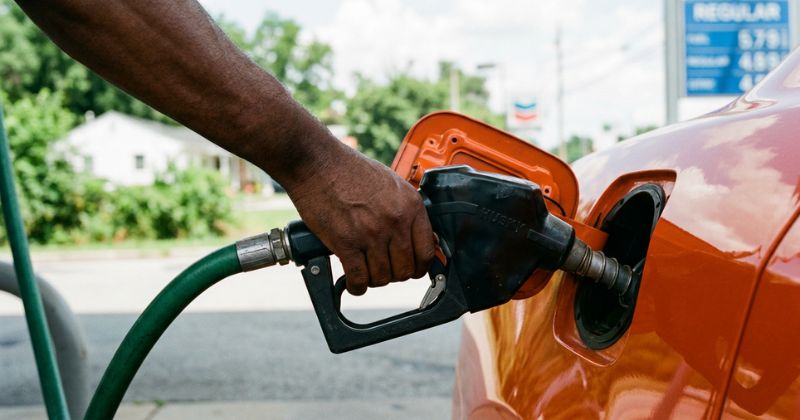
For petrol, the picture is somewhat different and less favourable than for diesel. Recoveries for petrol are currently trending towards a neutral outcome, with the Petrol 95 grade sitting at approximately -17 cents per litre. The reintroduction of R1.50 in taxes is, however, pushing the expected change at the pump towards an increase of approximately R1.70 per litre for petrol users.
Summary of expected June fuel price changes:
| Fuel Type | Over/Under-Recovery | Tax Effect | Expected Pump Change |
|---|---|---|---|
| Diesel | Over-recovery (positive) | +R1.97/litre levy reinstatement | Modest cut, circa 48c/litre (if full levy unwound) |
| Petrol 95 | Near-neutral (-17cpl) | +R1.50/litre tax reinstatement | Increase of approximately R1.70/litre |
Diesel prices have a significant knock-on effect on the broader South African economy because diesel powers most freight trucks, agricultural equipment, and generators. A lower diesel price generally reduces the cost of transporting goods, which can help moderate food price inflation over time.
Conclusion
The rand and South African markets face a challenging road ahead, with the Iran War continuing to drive oil prices higher, fuel-driven inflation becoming increasingly entrenched, and growth forecasts being revised downward at a steady pace. The prospect of three interest rate hikes before year-end adds yet another layer of pressure on already stretched consumers and businesses, while the partial unwinding of the general fuel levy threatens to erode whatever relief may emerge from diesel over-recoveries in June. Until the Strait of Hormuz reopens and global oil markets stabilise, South Africa’s economic trajectory is likely to remain under significant strain, with risks firmly tilted to the downside.
Fast, uncomplicated, and trustworthy loan comparisons
At Arcadia Finance, you can compare loan offers from multiple lenders with no obligation and free of charge. Get a clear overview of your options and choose the best deal for you.
Fill out our form today to easily compare interest rates from 19 banks and find the right loan for you.