
South Africa’s Department of Home Affairs is set to significantly broaden the scope of services available at bank branches nationwide, with plans well underway to include passport applications and the home delivery of official documents as part of an ambitious digital transformation programme. Home Affairs Minister Leon Schreiber shared the latest developments during his department’s budget vote for the 2026/27 financial year, presented at the National Council of Provinces.
Key Takeaways
- Home Affairs services are now available at 150+ bank branches: Smart ID replacements can already be done in as little as five minutes at participating Capitec, FNB, and Standard Bank branches, with passports, first-time ID applications, and home delivery of documents coming soon.
- The Green ID book is on its way out: With a record 4 million Smart IDs issued last year and a target of 750 bank branches activated by end of 2026, the department is accelerating the shift away from the Green ID – widely considered the most defrauded identity document on the continent.
- A Digital ID is in the works: Draft regulations have been published and are open for public comment until 6 June, with the goal of allowing South Africans to access their identity documents and Home Affairs services entirely through their smartphones.
About Arcadia Finance
Arcadia Finance helps you secure the right loan easily. Enjoy no application fees and access to 19 reputable lenders approved by South Africa’s National Credit Regulator.
From a Decade-Old Pilot to a Fully Digitalised Partnership Model
The department’s collaboration with the banking sector is not an entirely new development. A pilot programme was introduced roughly a decade ago; however, the original arrangement operated under a far more limited structure. Under the older model, Home Affairs staff members were seconded directly to bank branches, which meant the service could only be offered at approximately 30 locations across the country.
The updated model represents a fundamental shift in how the partnership operates. Banks now have considerably greater control over the delivery of services, and the requirement for Home Affairs personnel to be physically stationed at branches has been removed entirely. Since the new system went live, Capitec, FNB, and Standard Bank have collectively expanded the service to more than 150 branches.
South Africa has over 4,000 bank branches across the country. Reaching 750 of these with Home Affairs services would mean roughly 1 in every 5 branches could assist citizens with Smart ID applications.

What the New System Offers
The revamped service forms part of the broader Home Affairs @ Home initiative, which has been designed with the explicit goal of bringing essential government services closer to where South Africans actually live and work. Rather than requiring citizens to travel to a dedicated Home Affairs office and often sacrifice an entire day in the process, the new system has dramatically reduced the time it takes to submit an application.
According to Minister Schreiber, application times have been cut to as little as five minutes through the new digital partnership model. He further noted that by digitalising the long-standing partnership with the banking sector, access to Smart ID replacement services has already expanded by 47% within just the first two months of the new system being operational.
If you need a Smart ID replacement (not a first-time application), you can already visit one of the 150+ participating bank branches to do so – no need to queue at a Home Affairs office.
During the first eight weeks since the system launched, a total of 127,364 South Africans made use of the service at bank branches.
Services Available Now vs. Coming Soon
| Service | Status |
|---|---|
| Smart ID replacement | Available now at 150+ branches |
| First-time ID applications | Coming soon |
| Passport applications | Coming soon |
| Home delivery of documents | Coming soon |
| Online booking system | Upgraded and live |

Targets and Expansion Plans
The early success of the programme has prompted the department to raise its targets considerably. Home Affairs now aims to activate Smart ID replacement services at 750 bank branches by the end of 2026, with particular attention being paid to rural and underserved communities that have historically had limited access to government services.
The department’s previous target was to reach 1,000 branches by the end of the medium-term expenditure framework period, which runs to 2028/29. The revised target of 750 branches is actually more ambitious in terms of timeline, aiming to achieve a significant portion of that rollout two to three years earlier.
In the months ahead, the department intends to expand the range of services offered through the bank branch network to include:
- First-time Smart ID applications for citizens who have never held one
- Passport applications, allowing South Africans to apply without visiting a Home Affairs office
- Doorstep delivery of enabling documents, meaning citizens will no longer need to travel to collect their completed documents
The home delivery component is particularly notable, as it would allow citizens to arrange for their Smart IDs and passports to be brought directly to their place of residence, removing one of the last remaining reasons to visit a physical Home Affairs location.
Upgraded Online Booking System
Alongside the expanded service offerings, the department has also rolled out an overhauled online booking system for appointments at Home Affairs offices. The previous platform had become a target for abuse, with unscrupulous individuals booking appointment slots in bulk and then reselling them to desperate citizens who needed urgent access to Home Affairs services.
The new system has been built with protections specifically designed to prevent this type of exploitation. However, the Minister cautioned that the system may require a week or two to stabilise fully before it operates at its intended capacity.
If you encounter issues with the new booking system in its early days, try again after a few days as the department has acknowledged it will take some time to settle. Avoid using third-party services or individuals offering to book slots on your behalf – this is the exact practice the new system is designed to eliminate.
South Africa’s Digital ID: What Is Being Planned
Beyond the immediate expansion of bank branch services, the Department of Home Affairs is also working on a longer-term project: the development of a Digital ID system intended to allow South Africans to participate more fully in the modern digital economy.
Draft regulations under the Identification Act have recently been published by the department to establish the appropriate legal and procedural framework for the Digital ID. Minister Schreiber has invited stakeholders, including members of the public, to engage with the process during the public comment period, which closes on 6 June.
The Digital ID would enable South Africans to securely access critical personal documents and interact with Home Affairs services entirely through their smartphones, without needing to present any physical documentation.
The Phase-Out of the Green ID Book
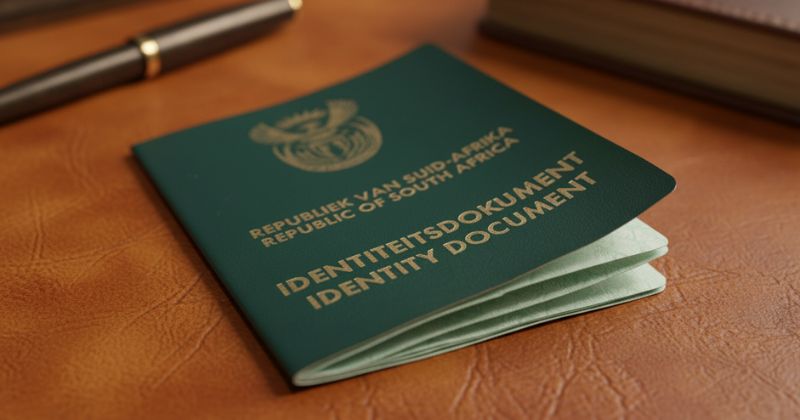
While the Digital ID represents a future-facing objective, the department’s more immediate priority is the transition of all South African citizens from the old Green ID book to the modern Smart ID card.
Minister Schreiber described the Green ID book as one of the most frequently defrauded identity documents on the African continent, noting that it sits at the centre of widespread identity theft and illegal immigration. The department issued a record 4 million Smart IDs in the previous year, with the new digital bank branch partnership expected to further accelerate that figure.
The long-term vision is that as Smart ID uptake increases substantially, the department will eventually be in a position to stop recognising the Green ID book as a valid form of identification altogether.
- This would effectively make the Smart ID card the sole recognised national identity document
- Eliminating the Green ID from official use would significantly reduce the fraud and identity theft that currently exploit its weaknesses
- The move would also bring South Africa in line with global best practices for national identity systems
If you still hold a Green ID book as your primary identification, it is strongly advisable to apply for a Smart ID replacement sooner rather than later – particularly as the number of convenient application points through bank branches continues to grow. The process is now faster and more accessible than ever before.
Conclusion
South Africa’s Department of Home Affairs is undergoing one of its most significant modernisation drives in recent memory, shifting away from the long-standing model of overcrowded offices and all-day queues towards a digitally driven, citizen-centred system that meets people where they are. With Smart ID services already live at over 150 bank branches, passport applications and home delivery on the horizon, a record-breaking Smart ID issuance rate, and a Digital ID framework in development, the trajectory is clear – Home Affairs is building infrastructure for a faster, more accessible, and more secure identity ecosystem. For ordinary South Africans, these changes represent a tangible improvement in how they interact with one of the most essential government departments in their daily lives.
Fast, uncomplicated, and trustworthy loan comparisons
At Arcadia Finance, you can compare loan offers from multiple lenders with no obligation and free of charge. Get a clear overview of your options and choose the best deal for you.
Fill out our form today to easily compare interest rates from 19 banks and find the right loan for you.