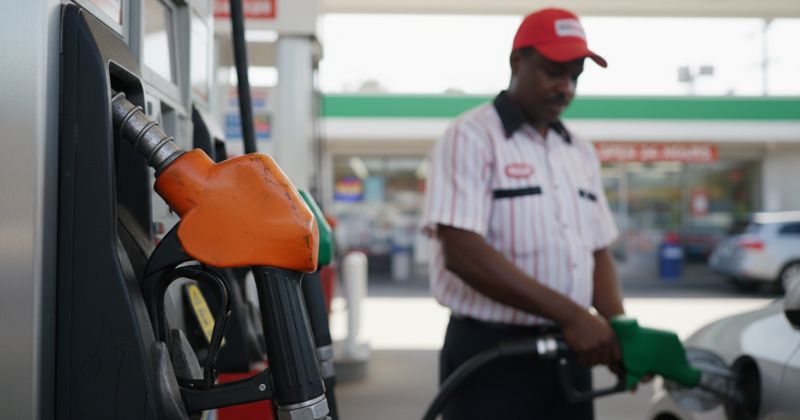
Following a dramatic swing in diesel prices across South Africa, petrol prices have also moved into an over-recovery position – but motorists should not celebrate just yet, as the National Treasury’s decision to begin phasing out its fuel levy relief from June will reverse the trend and push petrol prices firmly back into the red.
Key Takeaways
- Petrol prices are heading up despite an over-recovery: The small over-recovery of 3 to 8 cents per litre is nowhere near enough to offset the R1.50 per litre fuel levy reintroduction in June, leaving motorists facing a hike of over R1.40 per litre.
- Diesel users are the clear winners this month: The diesel over-recovery is large enough to absorb the returning fuel levy and still deliver a cut of between R2.30 and R3.00 per litre at the pumps.
- Full levy relief ends in July: The National Treasury is phasing out its R3.00 per litre relief over two months, with R1.50 added back in June and the remaining R1.50 removed in July, marking the complete end of the temporary relief introduced in April.
About Arcadia Finance
Secure your loan with ease through Arcadia Finance. Pay no application fees and compare offers from 19 trusted lenders, all fully compliant with South Africa’s National Credit Regulator standards. Enjoy a fast, reliable process tailored to your financial goals.
What the Latest Data Shows
According to the most recent figures published by the Central Energy Fund (CEF), petrol price recoveries have at last shifted into positive ground.
After beginning the month with an under-recovery of approximately 85 cents per litre, petrol prices are now reflecting an over-recovery of between 3 and 8 cents per litre – a modest but meaningful turnaround.
The Central Energy Fund (CEF) is a South African state-owned entity that monitors fuel price recoveries on behalf of the Department of Mineral and Petroleum Resources. It publishes mid-month data that gives consumers and analysts an early indication of where fuel prices are heading before the official announcement.
Whilst the over-recovery is relatively small, it marks the first positive recovery recorded after three consecutive months of steep and sustained price increases – a streak that has weighed heavily on household budgets and transport costs across the country.
Mid-Month Recovery Figures
The mid-month recovery data is as follows:
| Fuel Type | Mid-Month Recovery |
|---|---|
| Petrol 93 | Decrease of 8 cents per litre |
| Petrol 95 | Decrease of 3 cents per litre |
| Diesel 0.05% (wholesale) | Decrease of R5.02 per litre |
| Diesel 0.005% (wholesale) | Decrease of R4.26 per litre |
| Illuminating paraffin | Decrease of R5.21 per litre |
Petrol 93 is predominantly used in inland regions such as Gauteng, while Petrol 95 is the standard grade for coastal areas including Cape Town and Durban. The difference relates to altitude – higher octane fuel is required at sea level due to the denser air, whereas lower octane fuel performs adequately at altitude.
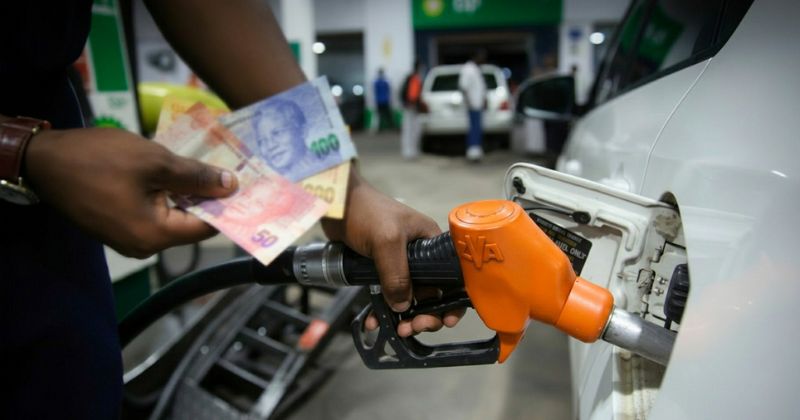
The Fuel Levy Relief Phase-Out Explained
Unfortunately, the over-recovery recorded for petrol is nowhere near substantial enough to offset the impact of the upcoming reintroduction of R1.50 per litre to fuel prices.
This increase is a direct consequence of the National Treasury beginning to wind down the R3.00 per litre fuel levy relief it introduced in April 2026.
The phase-out will proceed as follows:
- June 2026 – R1.50 per litre added back to fuel prices
- July 2026 – The remaining R1.50 per litre added back, with the relief terminated in full
Fuel levies in South Africa consist of several components, including the General Fuel Levy, the Road Accident Fund (RAF) levy, and the customs and excise levy. Together, these levies typically make up a significant portion of what motorists pay at the pump – often exceeding 30% of the total pump price.
This phased reintroduction will effectively cancel out the small cut that petrol prices were otherwise on track to deliver, turning what could have been welcome relief into yet another sizeable increase for motorists.
At current mid-month recovery levels, once the 50% fuel levy reintroduction is factored in, petrol prices are still projected to rise by more than R1.40 per litre when the new prices take effect next week.
Diesel Users Get a Far Better Deal
A considerably more positive outcome is expected for diesel users, where the over-recovery is large enough to comfortably absorb the return of the fuel levy component.
At current recovery levels, even after accounting for the 50% fuel levy reintroduction of R1.97 per litre for diesel, prices are expected to remain in positive territory – with a cut of between R2.30 and R3.00 per litre still anticipated for June.
Some economists have suggested that the scale of the diesel over-recovery might encourage the National Treasury to take the opportunity to reintroduce the full levy of R3.93 per litre for diesel in one go, rather than spreading it across two months.
Even in that more aggressive scenario, the over-recovery is large enough to absorb the full levy and still deliver a cut of between 33 cents and R1.09 per litre at the pumps in June.
June Fuel Price Projections
The table below outlines how June fuel prices could be affected depending on how much of the fuel levy is reintroduced:
| Fuel Type | Mid-Month Over/Under Recovery | 50% Fuel Tax Added Back (June) | 100% Fuel Tax Added Back (June) | Projected Change |
|---|---|---|---|---|
| Petrol 93 | R0.08 | (R1.50) | – | (R1.42) |
| Petrol 95 | R0.03 | (R1.50) | – | (R1.47) |
| Diesel 0.05% | R5.02 | (R1.97) | – | R3.05 |
| Diesel 0.005% | R4.26 | (R1.97) | – | R2.29 |
| Diesel 0.05% | R5.02 | – | (R3.93) | R1.09 |
| Diesel 0.005% | R4.26 | – | (R3.93) | R0.33 |
Figures shown in brackets represent price increases (money coming out of your pocket), while positive figures represent decreases. When comparing fuel grades, note that wholesale diesel prices do not include VAT or retail margins, so the actual pump price movement may differ slightly from these projections.

Markets Hold Steady
Petrol price recoveries have stabilised at a relatively neutral position, underpinned by a resilient rand and oil prices trading within a narrower band around $100 per barrel.
This relative market stability – at least when compared to the sharp shocks experienced in April and May – has helped pull recoveries away from the steep under-recovery territory that battered consumers in those earlier months.
The stability has carried into the current week, with the rand trading on the stronger side of its recent range at R16.36 against the US dollar on Monday, 25 May 2026.
The Rand and Interest Rates
The rand’s firmer footing has been supported in part by easing oil prices. Local financial markets are also watching closely for the South African Reserve Bank’s interest rate decision, which is due later this week.
Economists at Nedbank have indicated they expect the Monetary Policy Committee to raise the repo rate by 25 basis points, lifting it from its current level to 7%.
The repo rate is the interest rate at which the Reserve Bank lends money to commercial banks. When the repo rate rises, banks typically pass that cost on to consumers through higher lending rates, affecting home loans, vehicle finance, and credit card repayments.
Nedbank’s analysts noted that inflation expectations are particularly sensitive to petrol price increases, and that there is therefore a relatively elevated risk of second-round inflationary effects taking hold. The bank’s view is that tightening monetary policy at this stage would help ensure that the inflationary consequences of the current supply-side shock remain temporary, and would likely reduce the need for more severe interest rate increases later in the cycle.
Oil Markets and the Iran Factor
On the international front, oil prices fell to two-week lows on growing optimism that the United States and Iran were edging closer to a peace agreement – even as the two countries remained at odds over several key sticking points.
US President Donald Trump stated on Saturday that Washington and Tehran had largely worked through the terms of an understanding that would lead to the reopening of the Strait of Hormuz.
The strait, which prior to the conflict was responsible for transporting approximately one-fifth of all global oil and liquefied natural gas shipments, has remained closed for several months – a closure that has been a significant contributor to elevated fuel prices both locally and globally.
When Do the New Prices Take Effect?
The next round of fuel price adjustments will come into effect from Wednesday, 3 June 2026. The Department of Mineral and Petroleum Resources is expected to publish the official figures ahead of that date.
Conclusion
With petrol prices set to climb by more than R1.40 per litre in June and the full removal of levy relief still to come in July, South African motorists face a difficult few months ahead – even as diesel users enjoy a rare moment of reprieve at the pumps. The broader economic backdrop, from rising interest rates to a volatile oil market tied to geopolitical developments in the Middle East, suggests that fuel price stability remains some way off. Until the Strait of Hormuz reopens fully and the rand holds firmer ground, consumers would do well to budget carefully and keep a close eye on the Department of Mineral and Petroleum Resources’ official announcement ahead of 3 June 2026.
Fast, uncomplicated, and trustworthy loan comparisons
At Arcadia Finance, you can compare loan offers from multiple lenders with no obligation and free of charge. Get a clear overview of your options and choose the best deal for you.
Fill out our form today to easily compare interest rates from 19 banks and find the right loan for you.