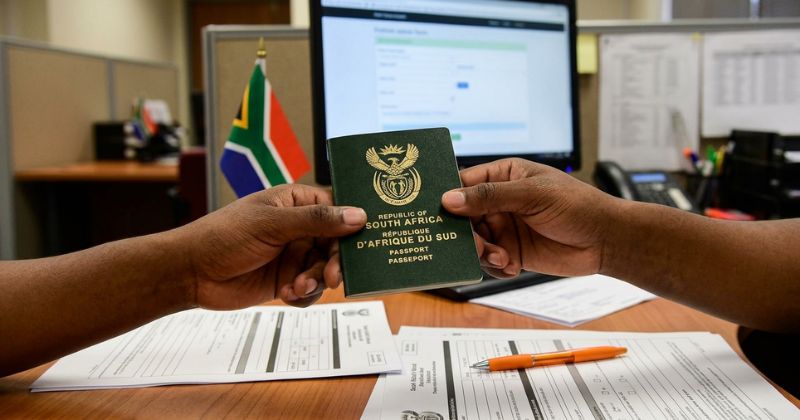
The Department of Home Affairs has published proposed regulations that would bring in a R500 processing charge for Electronic Travel Authorisations (ETAs) issued in South Africa, with Home Affairs Minister Leon Schreiber explaining that these fees, which had previously been waived altogether, would allow the new ETA platform to operate on a cost-effective basis whilst lowering the overall visa charges faced by travellers who currently have little choice but to pay outsourced service providers in order to travel to the country.
Key Takeaways
- Fee introduced for the first time: The ETA platform, which launched in October 2025 and has run as a fully subsidised service until now, will begin charging a R500 processing fee once the regulations are finalised.
- Costs vary by traveller category: Visa-exempt travellers pay R500 only if they opt in, visa-fee-exempt travellers pay just the R500 processing fee, and non-visa-exempt travellers pay R500 plus the R425 visa fee.
- Overall savings for non-visa-exempt travellers: Despite the new charge, this group will pay R925 in total, less than half the R1,975 currently charged under the outsourced system.
About Arcadia Finance
Get your loan sorted, hassle-free, with Arcadia Finance. No application fees, and a choice of 19 reputable lenders, all fully compliant with South Africa’s National Credit Regulator standards. Enjoy a simple process and reliable options built around your financial needs.
Background on the ETA Platform
The ETA platform first went live in October 2025 and, since then, has been made available to nationals of a select group of participating countries. It forms one part of a broader digital transformation programme being carried out by the Department of Home Affairs.
The department has been given a mandate to expand the system further, with the stated aim of enabling faster economic growth by rolling the platform out to tourists from every country whose citizens require a visa to enter South Africa.
Under the system, travellers are able to apply for their visas online and, in most cases, have their applications processed within a period of just 24 hours.
Applicants using ETA-style systems are generally advised to submit their applications well before their intended travel date, since technical delays, incomplete documentation, or additional verification checks can occasionally push processing beyond the usual turnaround time.

Why the Fee Is Being Introduced
Schreiber stated that when the first phase of the ETA system was rolled out, visa fees for the countries being onboarded were temporarily suspended, owing to the fact that the platform had not yet been fitted with an integrated online payment capability.
As a result, he noted, neither visa fees nor a dedicated ETA processing fee have been charged up to this point, even though there remains an ongoing need to invest in the operational upkeep of the system.
The minister further indicated that the ETA has, up until now, been running as an entirely subsidised service, a situation he described as unsustainable in the longer term.
He added that the department is now in a position to introduce further functionality, including an integrated online payment capability that will allow it to begin collecting application fees.
It has consequently been proposed that a processing fee of R500 be applied to every ETA application submitted.
What Happens in the Next Phase
Looking ahead, the department has indicated that the ETA will eventually become compulsory for travellers arriving from non-visa-exempt countries that have already been included on the platform, and that this requirement may, in time, be extended to all travellers regardless of nationality.
In the initial stage, however, Schreiber confirmed that use of the platform will remain optional for travellers coming from visa-exempt countries.
He went on to say that, notwithstanding the voluntary nature of the platform for visa-exempt travellers, the department nevertheless expects a swift uptake of the new system among this group, given the notable improvements in efficiency and security that it offers.
How the Fees Will Apply to Different Categories of Traveller
According to the Department of Home Affairs, the R500 processing fee will not apply uniformly, but will instead vary depending on which of the following categories a traveller falls into:
- Visa-exempt travellers who choose, of their own accord, to make use of the ETA platform in order to enjoy a more streamlined, secure, and convenient travel experience will also be required to pay the R500 processing fee. The department noted that this initial voluntary approach is designed to encourage uptake of the platform whilst still preserving the visa-free travel privileges these travellers already hold.
- Travellers from visa-required countries who are exempt from paying a visa fee will be obliged to use the ETA platform and will only be liable for the R500 visa processing fee. No separate visa fee will be charged to this category, in keeping with existing policy provisions relating to visa fee exemptions. The principal benefit for travellers in this group is a faster and more efficient processing experience.
- Travellers from visa-required countries who are not exempt from visa fees will likewise be required to use the ETA platform, but will be liable for both the standard visa fee and the additional R500 ETA processing fee.
Schreiber described this as a dual fee structure that ensures alignment with current cost-recovery principles, whilst also supporting the maintenance, sustainability, and ongoing operational funding of the ETA system.
Cost-recovery pricing is a common approach used by government digital services worldwide, where fees are set to cover the running costs of a platform rather than to generate profit for the state.
Notably, the department pointed out that non-visa-exempt travellers stand to benefit overall, since they will end up paying lower total fees under the new arrangement than they currently do.
These travellers will, in total, pay R925 per application under the proposed structure, compared with the R1,975 that they are presently charged under the existing, outsourced system.
Schreiber remarked that, in effect, the department is insourcing this critical function and, in doing so, enhancing the state’s own capacity, all whilst charging prospective tourists a price that amounts to less than half of what they currently pay.

Comparing the Existing and Proposed Fee Structures
The table below sets out how the current fee arrangement compares with the fee structure now being proposed.
Existing Fee Structure
| Category | Outsourced Service Provider Fee | Requirement | Existing Visa Fee | Total Cost to Traveller |
|---|---|---|---|---|
| Non-visa-exempt | R1 550 | Compulsory | R425 | R1 975 |
| Non-visa-exempt but visa-fee exempt | R1 550 | Compulsory | R0.00 | R1 550 |
| Visa-exempt | R0.00 | N/A | R0.00 | R0.00 |
Proposed Fee Structure
| Category | ETA Insourcing Fee | Requirement | Existing Visa Fee | Total Cost to Traveller |
|---|---|---|---|---|
| Non-visa-exempt | R500 | Compulsory | R425 | R925 |
| Non-visa-exempt but visa-fee exempt | R500 | Compulsory | R0.00 | R500 |
| Visa-exempt | R500 | Voluntary | R0.00 | R500 |
When comparing visa costs across different fee structures, it can be useful to look at the total cost to the traveller rather than any single line item, since a lower headline fee is sometimes offset by additional charges elsewhere.

Conclusion
The proposed R500 ETA processing fee marks a significant shift in how South Africa manages travel authorisations, moving the system away from a fully subsidised model towards one that supports its own maintenance and long-term sustainability, whilst still working out considerably cheaper overall for non-visa-exempt travellers than the current outsourced arrangement. With public comments on the proposed regulations open until 11 August 2026, and the ETA set to become compulsory for an increasing number of traveller categories in future phases, this development is one that prospective visitors to South Africa, along with travel operators and industry stakeholders, will likely want to follow closely in the months ahead.
Fast, uncomplicated, and trustworthy loan comparisons
At Arcadia Finance, you can compare loan offers from multiple lenders with no obligation and free of charge. Get a clear overview of your options and choose the best deal for you.
Fill out our form today to easily compare interest rates from 19 banks and find the right loan for you.