
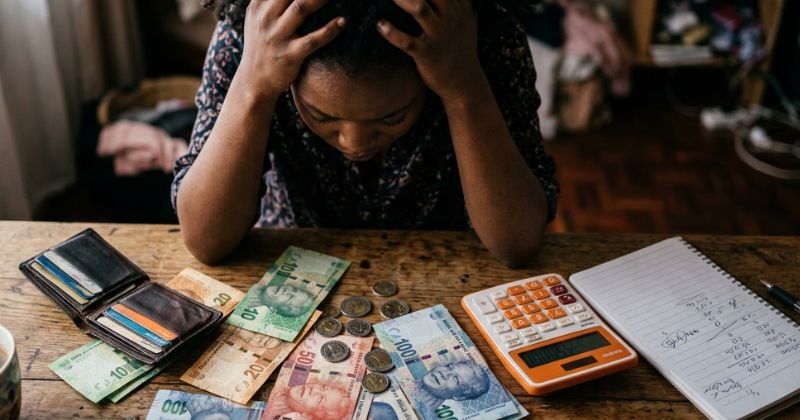
Women’s Month continues to unfold, and it coincides with the release of fresh official statistics on gender gaps in care work. On 6 August, Statistics South Africa released Gender Series Volume XIII, which points out that unpaid household care continues to go largely unacknowledged and is poorly captured within standard measures of economic output. The National Debt Counsellors (NDC) is now turning attention to the financial counterpart of that burden. In a great many South African households, there is one individual who keeps track of what is owed and when, decides which bills are settled and which must wait, and quietly absorbs the difference whenever the two do not line up. In most cases, that individual is a woman, regardless of whether she brings home the largest income.
Key Takeaways
- Women carry the financial load: one person, usually a woman regardless of income, manages bills and absorbs shortfalls, leaving her credit profile as the only record of it.
- Fewer credit products, better repayment: female-headed households hold fewer credit cards and mortgages than male-headed ones, yet are more likely to repay on time and own homes outright.
- Recurring credit use signals a structural gap: everyday costs pile up until credit fills the gap each month, a sign of genuine shortfall, not poor discipline, that debt review can legally address.
What the Census Figures Reveal
Census figures show that the share of South African households led by women climbed from 37.8 percent in 1996 to 49.5 percent in 2022, while women’s median monthly income in 2024 amounted to roughly 82 percent of what men earned. Volume XIII also established that households headed by women were more likely to be responsible for larger numbers of children and were more likely to reside within extended or multigenerational family arrangements.
According to René Moonsamy, Director at the National Debt Counsellors, the mental load is by nature something that cannot be seen. The financial load, however, works differently. Moonsamy explains that when a month’s income does not stretch far enough, the shortfall is bridged using credit, and that credit is then logged, by a credit bureau, under a single person’s name. A woman, Moonsamy notes, can hold an entire household together for ten years or more, yet the sole official trace of that effort will be her credit record.
In South Africa, a person’s credit profile can be checked by lenders, employers (with consent) and even landlords, meaning a poor score built up from covering family shortfalls can quietly limit opportunities well beyond borrowing.

Credit Access Tells a Different Story
On the subject of credit, the figures contradict a common assumption. Volume XII established that female-headed households possess fewer credit cards than their male-headed counterparts, at 6.3 percent compared with 9.7 percent, and hold less than half the number of mortgages, at 4.9 percent against 9.1 percent. Despite this, these households are more likely to keep up with their repayments, and more likely to be living in homes that are fully paid off.
A Snapshot of the Figures
| Measure | Female-headed households | Male-headed households |
|---|---|---|
| Households headed by this group (1996) | 37.8% | 62.2% |
| Households headed by this group (2022) | 49.5% | 50.5% |
| Median monthly earnings (2024, relative) | About 82% of male earnings | 100% (baseline) |
| Hold a credit card | 6.3% | 9.7% |
| Hold a mortgage | 4.9% | 9.1% |
| Likelihood of being up to date with repayments | Higher | Lower |
| Likelihood of owning a home outright | Higher | Lower |
Checking a credit report regularly, even when finances feel stable, helps catch errors or accounts opened without full awareness before they grow into bigger problems. Under South African law, consumers are entitled to one free credit report per year from each registered credit bureau.
About Arcadia Finance
Get a loan the easy way with Arcadia Finance. No application fees, no hassle. Just compare offers from 19 trusted, NCR-compliant lenders and find the option that fits your needs.
What the Load Actually Involves
The expenses that build up this load are seldom large or dramatic on their own. A single month might involve:
- Groceries and school levies
- A taxi fare to get someone where they need to be
- A prescription for an ageing parent
- A contribution towards a relative’s funeral that simply could not be turned down
Occurring month after month, these costs push a household budget beyond what it can bear, and the resulting gap tends to be closed using whatever credit happens to be available, whether that is a retail account, a credit card, a personal loan, or a short-term loan.
Four Practical Steps to Make the Load Visible
Moonsamy outlines four practical measures households can take to bring this load into the open and distribute it more fairly:
- Put the household ledger in writing. This is not a budget in the traditional sense, but rather a single page setting out who actually pays for what each month, including the contributions that nobody normally itemises.
- Treat support for extended family as a proper budget line, not a one-off decision made in the moment. It is frequently the largest expense in a household that was never actually planned for.
- Pay attention to repeated use of short-term credit. When the same credit facility is used to cover the same gap every single month, that points to a structural shortfall rather than a spending habit.
- Know exactly whose name the accounts are registered under, because that individual carries the full credit consequence on their own. A free tool such as Finance 365 can show precisely what lenders are able to see.
Setting a recurring monthly date, even something as simple as the first Sunday of the month, to sit down and review the household ledger together can turn an invisible burden into a shared, ongoing conversation rather than a once-off confrontation.
A Note on Men in the Same Position
This load is not confined to women alone. Men who find themselves in single-earner or caregiving roles face comparable pressure, and the same principles apply just as much to them.

Conclusion
The data makes clear that the financial load women carry is not a matter of poor money management but a structural gap between rising responsibility and stagnant earnings, one that shows up in credit records rather than recognition. Closing that gap starts with making the load visible, through honest household ledgers, planned budgeting for family support, and awareness of whose name carries the risk, paired with the understanding that seeking help through legal protections like debt review is a sound financial decision, not an admission of failure.
Fast, uncomplicated, and trustworthy loan comparisons
At Arcadia Finance, you can compare loan offers from multiple lenders with no obligation and free of charge. Get a clear overview of your options and choose the best deal for you.
Fill out our form today to easily compare interest rates from 19 banks and find the right loan for you.