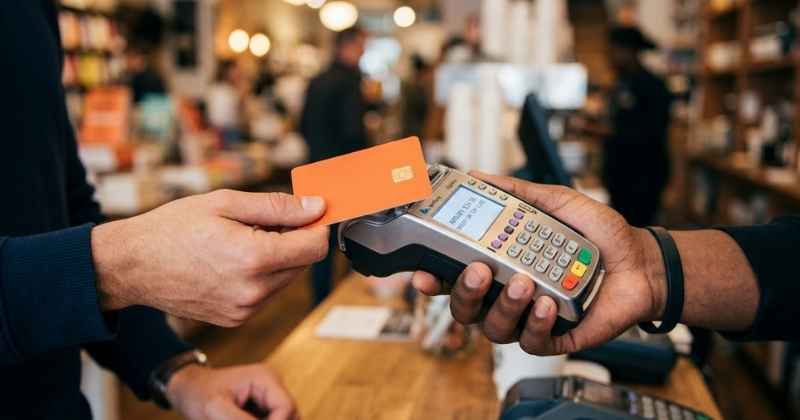
Consumers who rely on bank cards to settle everyday purchases are being urged not to simply go along with extra charges tacked on for using a point of sale (POS) machine. Phetho Ntaba, spokesperson for the National Consumer Commission (NCC), reported that the commission has been receiving queries and complaints regarding shops that add fees onto transactions whenever a customer pays by card. The bulk of these complaints centre on independent traders and spaza shops, with the added charges said to range from roughly R2 up to R10, depending on how much the purchase is worth.
Key Takeaways
- Clear pricing and reporting are equally important: Section 26 of the CPA requires visible pricing on or near products, and consumers who encounter surcharges or hidden prices can report these directly to the NCC for education or enforcement action.
- Card surcharges on goods are not allowed: under the CPA, a shop cannot legally charge extra simply because a customer pays by card, since this counts as charging a price different from the one displayed.
- Not all retailers are deliberately breaking the rules: some genuinely misunderstand the law, having passed on their own POS machine costs without realising this practice is prohibited, while others knowingly take advantage of card-paying customers.
About Arcadia Finance
Getting a loan doesn’t have to be complicated. With Arcadia Finance, you can compare 19 reputable, NCR-compliant lenders, all with no application fees, and find the right fit for your needs.
What the Law Actually Says
Ntaba pointed out that the Consumer Protection Act (CPA) states plainly that a supplier is not permitted to charge a consumer a price that differs from the one already displayed. On this basis, the NCC has put out an advisory directed at retailers, cautioning them against adding on charges purely because a customer has chosen to pay with a card.
Ntaba further explained that this sort of practice can end up disadvantaging consumers, particularly those who opt to pay by card because keeping cash on them may not feel safe.
Safety tip: card payments are often recommended in areas with higher rates of pickpocketing or robbery, since carrying less cash reduces what can be lost or stolen, which is part of the reason regulators take card-related surcharging so seriously.
Not Every Retailer Is Acting in Bad Faith
Ntaba acknowledged that some shop owners genuinely may not realise that this kind of additional charge is not allowed. A number of businesses invested in POS machines specifically to make transactions smoother and safer for their customers, but may have then passed the cost of running those machines back onto the very customers they were meant to benefit.
She noted that while some shops do take advantage of the situation, others are simply unaware of the correct procedure.
According to Ntaba, the expense of accepting card payments ought to be treated as an ordinary cost of running a business, rather than something passed along to the customer at the till. She stated that it cannot fall on the consumer to pay for that service, adding that swiping or tapping a card to complete a purchase does not count as a separate service under the CPA.
She likened this cost to other standard business expenses, such as the cost of transporting stock from a wholesaler to a shop, explaining that businesses are expected to absorb that cost themselves rather than shift it onto the customer.
Worth remembering: bank card surcharging is banned or tightly restricted in many countries beyond South Africa, including within the European Union and Australia, precisely because it can quietly inflate the advertised price of everyday goods.

When a Fee Might Actually Apply
This means a shop is not entitled to tell a customer that a loaf of bread, a litre of milk, or any other item now costs an extra R2, R5, or R10 simply because that customer has chosen to pay by card.
That said, Ntaba drew a clear line between paying for goods and withdrawing cash at a spaza shop through a POS machine. She explained that cash withdrawals may be governed by a different set of rules and could need to be looked at within the context of the banking ombud.
She stressed that, where goods and services are concerned, the Consumer Protection Act does not allow that extra fee to be charged under any circumstances.
Prices Must Be Clearly Displayed
The NCC also flagged a further common problem, namely products being sold without their prices clearly shown. Ntaba said that this goes against Section 26 of the CPA, and that the law requires pricing to appear either directly on the product or immediately next to it.
Businesses are not obliged to invest in costly or elaborate pricing systems. What matters, according to Ntaba, is that consumers are able to see exactly what they will be expected to pay before they go ahead and complete a purchase.

How to Report Non-compliant Businesses
Consumers who come across either of these practices, undisclosed card surcharges or unclear pricing, are encouraged to report them to the NCC. Ways to do this include:
- Contacting the commission’s contact centre directly
- Reaching out through the NCC’s social media channels, including its X account
- Using the NCC’s website and its online e-services to lodge a formal complaint
Ntaba said the commission wants consumers to come forward and report non-compliant businesses so that it can first educate suppliers on what the law requires and, where that is not enough, take enforcement action. She added that the commission does issue compliance notices, and can also refer matters to the tribunal in order to bring such practices to an end.
Extra tip: keeping a till slip or a screenshot of the amount charged versus the price displayed can make a real difference when lodging a complaint, since it gives the NCC clear proof to act on rather than a verbal account alone.
Conclusion
At its core, this warning is about ensuring that the price a consumer sees is the price they actually pay, regardless of whether they choose to settle a purchase in cash or by card. While cash withdrawals at spaza shops may fall under separate banking rules, surcharging on ordinary goods and services has no legal basis under the Consumer Protection Act, and the responsibility for covering card processing costs rests with the business, not the customer. Consumers who notice these practices, whether an unexplained card fee or a product with no visible price, are encouraged to report them to the NCC, which aims to first guide non-compliant retailers before resorting to compliance notices or formal action through the tribunal.
Fast, uncomplicated, and trustworthy loan comparisons
At Arcadia Finance, you can compare loan offers from multiple lenders with no obligation and free of charge. Get a clear overview of your options and choose the best deal for you.
Fill out our form today to easily compare interest rates from 19 banks and find the right loan for you.