The South African rand gained ground on Thursday as financial markets carefully assessed a series of monthly domestic economic data releases intended to provide a clearer picture of the country’s overall economic health. Having dipped to levels exceeding R16.80 in the immediate aftermath of the United States Federal Reserve’s interest rate announcement earlier in the week, the rand staged a meaningful recovery to settle at approximately R16.70 against the dollar.
Key Takeaways
- Import crackdown is accelerating: Trade Minister Parks Tau is rapidly widening the net of countries subject to enhanced quality checks, signalling that South Africa is taking a firmer stance against the flood of substandard goods entering the local market.
- Food and energy costs are squeezing consumers from both sides: Rising oil prices and climate-driven agricultural disruptions are converging to push both fuel and food inflation higher, placing growing pressure on household budgets across the country.
- The rand is holding but risks remain: While the rand recovered to R16.67 against the dollar on Saturday, it remains sensitive to external shocks – particularly US Federal Reserve decisions, oil price volatility, and global currency interventions – any of which could quickly reverse recent gains.
About Arcadia Finance
Apply for a loan effortlessly with Arcadia Finance. Compare offers from 19 reputable, NCR-compliant lenders with zero application fees.
The Rand Strengthens Amid Global Market Movements
This upward movement in the rand’s value can further be attributed to a broader weakening of the US dollar, which came under pressure following signals from Japanese government officials suggesting the possibility of currency market intervention to shore up the yen. Persistent downward pressure on global oil prices also played a contributing role in supporting the rand’s recovery.
When the US dollar weakens, it tends to benefit emerging market currencies like the rand, as investors seek higher-yielding assets in developing economies.
Oil Prices: A Volatile Week for Energy Markets
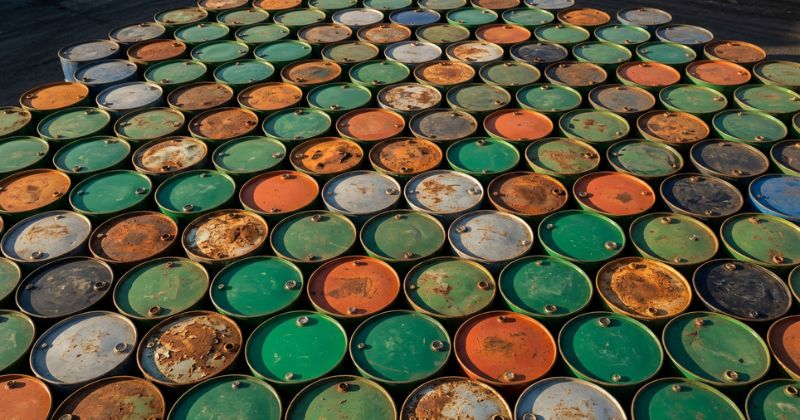
Oil prices experienced considerable turbulence during the week, briefly spiking above $126 per barrel amid heightened concerns that escalating tensions between the United States and Iran could disrupt oil supply chains across the Middle East – one of the world’s most critical energy-producing regions. However, those gains were not sustained, and prices eventually pulled back from those elevated levels.
By the time of this report, the price of crude oil had retreated to approximately $110 per barrel, though it remains significantly elevated relative to historical averages.
South Africa imports roughly 65% of its crude oil requirements, making it one of the most oil-dependent economies on the African continent. The country has no significant domestic oil production of its own.
Because South Africa is a net importer of energy rather than an exporter, the country finds itself particularly exposed and vulnerable to sudden swings in global oil prices, which directly affect the cost of fuel, transport, and manufacturing across the domestic economy.
Key Economic Indicators at a Glance
South Africa’s producer price inflation (PPI) – which measures price changes from the perspective of the seller rather than the consumer – climbed to 2.3% year-on-year in March, according to figures published by Statistics South Africa (Stats SA) on Thursday.
Additional economic data released alongside the PPI figures revealed the following:
- Trade surplus: South Africa recorded a trade surplus of R31.87 billion for March, meaning exports exceeded imports by that margin during the month.
- Budget deficit: National Treasury data showed a budget deficit of R45.61 billion for the same period, indicating that government expenditure surpassed revenue collection.
A trade surplus is generally a positive sign for a currency, as it means more foreign currency is flowing into the country than leaving it. South Africa’s March surplus offered some support to the rand’s overall stability.
Currency and Commodity Snapshot
On Saturday, the rand was trading at the following rates against major global currencies:
| Currency | Exchange Rate |
|---|---|
| US Dollar (USD) | R16.67 |
| British Pound (GBP) | R22.60 |
| Euro (EUR) | R19.51 |
In commodity markets, gold was trading lower at $4,615.24 (R76 936.35) per troy ounce, while crude oil was priced at $108.20 (R1 803.69) per barrel.
5 Important Things Happening in South Africa Today

1. Big Changes for Imported Products
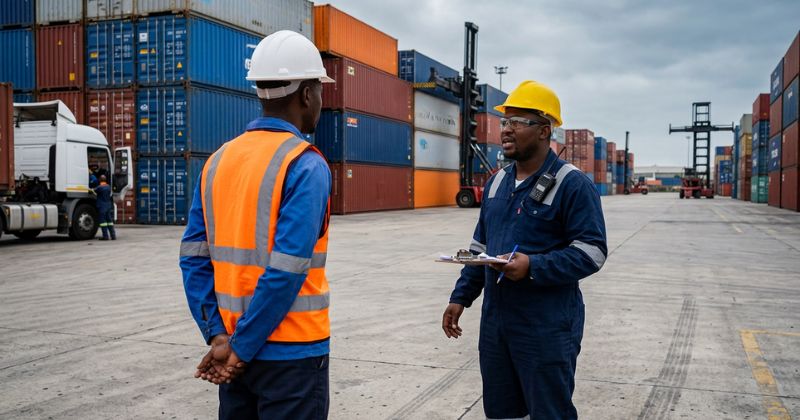
South African trade authorities are actively pursuing a significant expansion of the list of countries that will be required to meet enhanced quality and safety standards on goods exported to South Africa. Trade and Industry Minister Parks Tau is moving swiftly to address the rapid influx of unregulated and substandard products that have been flooding the local market in recent months, posing risks to both consumers and domestic manufacturers.
The crackdown is understood to form part of a broader strategy to protect South African industries and ensure that imported goods meet the same standards required of locally produced products.
South Africa’s National Regulator for Compulsory Specifications (NRCS) is the body responsible for enforcing product safety and quality standards at the border. It covers everything from electrical appliances to foodstuffs and cosmetics.

2. Bad News for Food Prices in South Africa
Food inflation in South Africa is widely expected to rise in the coming months, driven by a damaging combination of two separate but compounding forces – shifting and increasingly unpredictable weather patterns linked to climate change, and ongoing geopolitical tensions that are disrupting global agricultural trade and supply chains. Both factors are exerting pressure on the country’s agricultural sector, with knock-on consequences for the prices consumers pay at the supermarket.
South Africa is considered a food-secure nation at the national level, but household-level food insecurity remains a serious concern, with millions of South Africans spending more than 30% of their income on food – meaning even small price increases have an outsized impact on vulnerable households.

3. Possible Halt of Exams During Elections
Cooperative Governance and Traditional Affairs Minister Velenkosini Hlabisa has publicly stated that the scheduling of school examinations may be suspended or paused during the week of the upcoming local government elections, with the intention of enabling as many South Africans as possible – including students, parents, and teachers – to exercise their right to vote without hindrance. President Cyril Ramaphosa formally announced on Thursday that the next round of local government elections will be held on 4 November.
South Africa holds local government elections separately from national and provincial elections. Local elections determine the composition of municipal councils across the country’s 257 municipalities.

4. Warning About Gambling Regulations
Major hospitality and gaming group Sun International has issued a formal warning to investors and stakeholders that an increasingly stringent regulatory environment – specifically aimed at curbing irresponsible and problem gambling – could pose a material threat to the company’s business operations and long-term financial performance. This concern is particularly relevant as online betting continues to grow at a rapid pace both within South Africa and globally, creating regulatory challenges that traditional casino operators say could place them at a competitive disadvantage if not applied uniformly across all platforms.
South Africa’s online gambling market is currently estimated to be worth billions of rands annually, and is growing at a compound annual growth rate well above that of traditional land-based gambling venues.

5. Price Increase for South Africa’s Fourth-Largest Fibre Operator
MetroFibre Networx – South Africa’s fourth-largest fibre network operator by subscriber count – has announced a significant increase in pricing for its prepaid connectivity products, with effect from 1 May 2026. The company’s entry-level prepaid 30Mbps MetroConnect service will increase in price by between 18% and 25%, depending on the specific package and region. In addition to the price adjustments, MetroFibre is introducing prepaid voucher options for its higher-speed 60Mbps and 100Mbps service tiers, aimed at giving subscribers greater flexibility in how they manage and pay for their internet connectivity.
South Africa’s fibre-to-the-home (FTTH) market has expanded rapidly over the past decade, with the country now having one of the highest fibre penetration rates on the African continent. The top operators by network size include Openserve, Vumatel, Frogfoot, and MetroFibre.

Conclusion
South Africa finds itself navigating a complex and pressured economic landscape, where a tentatively recovering rand offers little comfort against the backdrop of rising oil prices, climbing food inflation, and an influx of substandard imported goods that regulators are now scrambling to contain. While positive signals such as the March trade surplus and the rand’s partial recovery from its mid-week lows suggest the economy retains some resilience, the dual threat of geopolitical tensions abroad and structural vulnerabilities at home means that consumers, businesses, and policymakers alike will need to remain watchful in the weeks and months ahead. The government’s moves on import quality controls and election logistics demonstrate a willingness to act, but whether these measures will be sufficient to meaningfully shield ordinary South Africans from the compounding pressures of energy costs, food price increases, and connectivity expense remains to be seen.
Fast, uncomplicated, and trustworthy loan comparisons
At Arcadia Finance, you can compare loan offers from multiple lenders with no obligation and free of charge. Get a clear overview of your options and choose the best deal for you.
Fill out our form today to easily compare interest rates from 19 banks and find the right loan for you.