
South Africa’s microlending sector continues to serve as one of the most vital pillars of financial inclusion in the country, extending access to credit for millions of citizens who would otherwise remain entirely outside the reach of conventional banking institutions. However, as the industry expands at a considerable pace – particularly through the rapid proliferation of digital platforms and fintech-driven services – it has simultaneously become an increasingly attractive target for organised and highly sophisticated fraud operations.
Key Takeaways
- Fraud is evolving at an unprecedented pace: AI-generated documents, synthetic identities, and deepfake biometric attacks are becoming the norm, making it increasingly difficult for lenders and consumers alike to detect deception before damage is done.
- Both lenders and consumers are targets: Fraud in South Africa’s microlending sector operates on two fronts – organised syndicates exploit lenders through mass fraudulent applications, whilst vulnerable consumers are preyed upon through fake loan offers, counterfeit apps, and impersonation scams.
- Vigilance and collaboration are the strongest defences: No single party can combat this alone – registered lenders, regulatory bodies such as the NCR and SAFPS, and informed consumers must work together, combining advanced detection technology with public awareness to protect the integrity of the sector.
About Arcadia Finance
Get the loan you need without the hassle. Arcadia Finance connects you to 19 NCR-compliant lenders at zero cost. No application fees, no guesswork, just a faster path to funding.
An Unprecedented Rise in Fraud Across the Sector
Niresh Gopichand, Risk Director at Atlas Finance, has noted that fraud is evolving at a rate that is entirely without precedent in the sector’s history. He further highlights that there has been a marked and measurable increase in the use of artificially generated documentation by consumers seeking to misrepresent their financial circumstances, alongside the emergence of counterfeit websites specifically engineered to impersonate legitimate lending institutions, including Atlas Finance itself. Each month, the organisation’s dedicated risk team is required to take down thousands of fraudulent digital sites that have been erected with the deliberate intention of defrauding unsuspecting members of the public.

The Scale of the Problem
Recent data paints a sobering picture of just how widespread fraudulent activity has become across the country. According to research published by TransUnion, an alarming 68% of South Africans reported being directly targeted by some form of fraud within a single three-month period alone, with the range of scam types spanning from phishing attempts and identity theft to more elaborate financial deceptions. Concurrently, the Southern African Fraud Prevention Service (SAFPS) has reported a sharp and sustained increase in impersonation-related and identity-linked fraud incidents, with the volume of reported cases growing significantly over recent years.
South Africans can register with the SAFPS’s Protective Registration system, which alerts credit providers to verify the identity of any applicant who matches a registered profile – providing an additional layer of protection for individuals whose identity documents may have been compromised.
The Rise of Borrower Deception
One of the most concerning trends to emerge in the current landscape is the notable increase in external borrower fraud, wherein individuals resort to deliberate deception in order to secure loans they would not otherwise qualify for. The tactics employed are varied and increasingly difficult to detect, encompassing the use of stolen personal information, falsified income documentation, and so-called synthetic identities – a particularly insidious approach in which real data belonging to an actual person is combined with fabricated information to construct an entirely new and fictitious persona.
A 2025 survey conducted by FICO, an international financial analysis company, revealed that as many as 26% of South Africans consider it acceptable to exaggerate their income when submitting a credit application, pointing to a deeply troubling normalisation of first-party fraud within the country’s broader credit environment. Whilst financial pressure and economic hardship undoubtedly contribute to this behaviour, the cumulative effect places an enormous operational and financial burden upon lenders, and ultimately results in higher borrowing costs and increasingly restrictive lending criteria for all consumers.
First-party fraud – where a real person provides false information about themselves – is legally classified as fraud in South Africa under the Prevention and Combating of Corrupt Activities Act and related legislation. Penalties can include criminal prosecution and a permanent adverse record on one’s credit profile.
Identity Theft and Impersonation of Legitimate Borrowers
Of even greater concern is the rapidly growing trend of fraudsters impersonating legitimate borrowers through the use of stolen identities. When criminals gain access to an individual’s identity number, contact details, and banking information – whether through data breaches, phishing schemes, or the purchase of stolen data on the dark web – they are often able to secure loans under entirely false pretences. The consequences for victims are frequently severe, leaving them saddled with damaged credit records, unexpected debt obligations, and considerable emotional and financial distress.
According to the SAFPS, identity fraud victims in South Africa can apply for a “Victim of Impersonation” listing on their credit bureau profile, which serves as a warning flag to prospective lenders to exercise additional verification before approving credit in that individual’s name.
Microlenders Under Sustained Attack
Lending institutions themselves have become prime targets for highly organised fraud syndicates that leverage stolen or entirely fabricated identities to bypass established verification systems and secure loans that are never repaid. In some of the more sophisticated cases that have been uncovered, a single fraud operation has been found capable of generating thousands of fraudulent loan applications through the use of automated tools and large repositories of compromised personal data, with minimal human intervention required at each stage.
AI-Driven Biometric Attacks
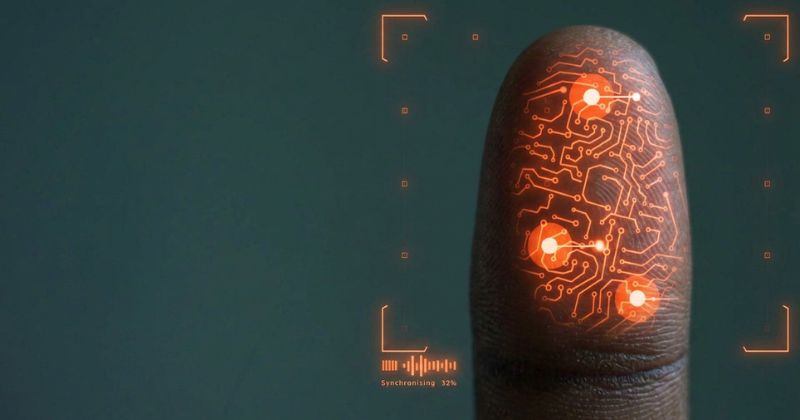
As fintech adoption continues to accelerate across the African continent, so too does the technical sophistication of the attacks being launched against digital lenders. A recent report titled the “2026 Digital Identity Fraud in Africa Report” found that AI-driven fraud is now responsible for the majority of biometric identity attacks recorded across Africa, with criminal actors employing stolen facial data and advanced deepfake technology to defeat digital identity verification systems that were considered robust only a few years ago.
This rapidly evolving threat landscape means that both traditional lenders and their digital counterparts must invest continuously in strengthening their fraud detection capabilities and updating their identity verification processes to keep pace with adversaries who are equally well-resourced and technically capable.
When selecting a digital lender, consumers should look for platforms that use liveness detection technology during the onboarding process – this goes beyond simple facial recognition and requires the applicant to perform real-time movements or actions that cannot be replicated using a static photograph or pre-recorded video.
Below is a summary of the primary fraud vectors targeting the microlending sector and their respective impact levels:
| Fraud Type | Method Used | Primary Target | Impact Level |
|---|---|---|---|
| Synthetic Identity Fraud | Combination of real and fabricated data | Lenders | High |
| Biometric Spoofing | Deepfake / stolen facial data | Digital platforms | Very High |
| Income Falsification | Fabricated payslips / bank statements | Lenders | Medium-High |
| Identity Impersonation | Stolen ID numbers and personal details | Consumers and lenders | High |
| Fake Loan Scams | Counterfeit websites and apps | Consumers | High |
| Phishing Attacks | Fraudulent communications | Consumers | Medium-High |
Loan Scams Targeting Consumers
Beyond their attacks on lending institutions directly, fraudsters are simultaneously exploiting financially vulnerable consumers through elaborately constructed fake loan offers designed to appear entirely legitimate at first glance. These scams characteristically promise rapid approval, unusually low interest rates, and assurances that no credit or background checks will be required – all of which represent significant warning signs that should prompt immediate scepticism.
In the majority of cases that have been documented, victims are instructed to make upfront payments described as fees, taxes, insurance premiums, or administrative charges before the promised loan amount will be “released” into their account. Once such a payment has been made, the fraudster disappears entirely, leaving the victim with neither the loan funds nor any prospect of recovering the money already paid. Industry analysis consistently identifies loan scams as one of the most prevalent forms of fintech fraud in South Africa, disproportionately affecting individuals who are in urgent need of financial assistance and therefore less likely to pause and scrutinise an offer carefully.
No legitimate, registered lender in South Africa will ever require a borrower to pay money upfront before disbursing a loan. The collection of fees, insurance, or any other charges prior to loan disbursement is explicitly prohibited under the National Credit Act and should be treated as an immediate and definitive red flag.
The Proliferation of Counterfeit Apps and Websites
The rapid proliferation of fake lending applications and websites has further intensified the challenge for consumers attempting to access credit safely. Fraudsters are devoting considerable resources to building convincing digital platforms that closely mimic the branding, design, and user experience of well-established and reputable lenders, with the twin objectives of harvesting sensitive personal information and extracting direct financial payments from unsuspecting visitors.
Gopichand has emphasised that consumers’ personal information is an extraordinarily valuable commodity in the eyes of fraudsters, and that it can be weaponised to commit fraud in a victim’s name long after the initial theft has occurred. He notes that while lenders are investing heavily in advanced fraud detection systems and monitoring capabilities, combating fraud on this scale requires a genuinely collective effort from all parties involved – including consumers themselves. The adage that an offer which appears too good to be true almost invariably is remains as relevant as ever in this context.

A Call for Vigilance
Sustained public awareness continues to represent one of the most critical and cost-effective defences available against microlending fraud, and consumers are strongly urged to exercise extreme caution when it comes to sharing personal information with any party whose credentials have not been thoroughly verified. This is especially the case with highly sensitive documentation such as identity numbers, payslips, bank statements, and banking login credentials, all of which can cause severe and long-lasting damage if they fall into the wrong hands.
Protecting Yourself from Microlending Fraud
Gopichand advises consumers to adopt the following protective practices as a baseline defence against the most common forms of microlending fraud:
- Never share your identity number or financial details with any party that has not been independently verified as a registered and legitimate credit provider
- Exercise extreme caution when confronted with loan offers that require any form of upfront payment before funds are disbursed, regardless of how the charge is described
- Avoid downloading lending applications from unofficial or third-party application stores, and always verify the authenticity of an app before granting it access to your personal information
- Confirm that any lender you engage with is formally registered with the National Credit Regulator (NCR) before submitting any personal documentation
- Monitor your credit profile on a regular basis through one of South Africa’s registered credit bureaux to detect any suspicious or unauthorised credit activity at the earliest opportunity
You can verify whether a credit provider is registered with the NCR by visiting the NCR’s official website at ncr.org.za and searching the public register of registered credit providers – this takes less than two minutes and could save you from significant financial harm.

Conclusion
South Africa’s microlending sector stands at a critical crossroads, where the promise of financial inclusion is increasingly shadowed by the threat of sophisticated and rapidly evolving fraud. As criminals grow more technologically capable – leveraging AI, stolen identities, and counterfeit platforms to exploit both lenders and consumers – the stakes for the entire industry have never been higher. The path forward demands more than reactive measures; it requires a proactive and unified commitment from lenders, regulators, and consumers to treat fraud prevention not as a compliance exercise, but as a shared responsibility. With the right combination of advanced technology, regulatory oversight, and informed public behaviour, the sector can continue to fulfil its vital role in driving economic empowerment without becoming a gateway for those who seek to abuse it.
Fast, uncomplicated, and trustworthy loan comparisons
At Arcadia Finance, you can compare loan offers from multiple lenders with no obligation and free of charge. Get a clear overview of your options and choose the best deal for you.
Fill out our form today to easily compare interest rates from 19 banks and find the right loan for you.