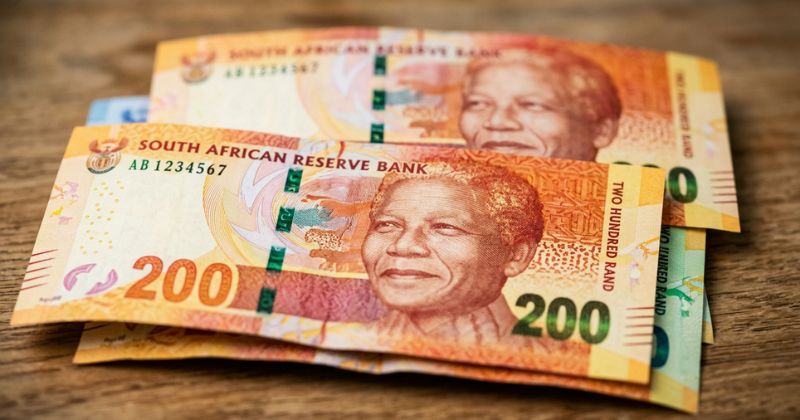
Anchor Capital has cautioned that the risks facing the rand remain extremely elevated and that the currency could weaken all the way to R18 against the dollar, although the firm remains hopeful that it will ultimately settle closer to R16 to the dollar.
Key Takeaways
- Wide forecasting range: Anchor Capital sees the rand potentially weakening to around R18.00/$ in a risk scenario, but settling closer to R16.00/$ if the Middle East conflict eases, underlining just how uncertain the outlook remains.
- Resilience despite volatility: Even amid the shock of the Iran conflict, the Strait of Hormuz closure, and sharp swings in Brent crude prices, the rand has held up better than expected and remains firmer than it was at the start of 2026.
- Improving fundamentals support the currency: A weaker US dollar globally, better terms of trade, recent credit rating upgrades, and stronger government finances are giving the rand a solid underlying foundation, even as geopolitical risk clouds the near-term picture.
About Arcadia Finance
Arcadia Finance takes the hassle out of borrowing. Pay zero application fees and choose from 19 trusted, NCR compliant lenders, with a smooth process designed to match your financial goals.
Anchor Capital’s Outlook on the Rand
According to the investment company, the second quarter of 2026 proved to be exceptionally turbulent, a period defined by joint strikes carried out by the United States and Israel against Iran, followed by the temporary shutting down of the Strait of Hormuz, a waterway through which more than 30% of the world’s oil supply passes.
The Strait of Hormuz is only about 33 kilometres wide at its narrowest point, with the shipping lane in each direction just 3 kilometres across, making it one of the most strategically important and vulnerable chokepoints in global energy trade.
As a direct consequence of the conflict, oil prices experienced a spike never seen before, with Brent crude futures surging to US$76 per barrel (around R1 260 per barrel at an exchange rate of R16.58/$) before climbing even further to a peak of close to US$126 per barrel (approximately R2 089 per barrel at the same rate) at the most intense point of the fighting.

Trump’s Repeated Peace Declarations
Anchor pointed out that United States President Donald Trump was reported to have declared, on no fewer than 39 separate occasions, that the war had been won and that a peace agreement had been reached, only for those statements to be walked back a few days later each and every time.
A memorandum of understanding consisting of 14 points was subsequently signed by the two nations, which allowed oil shipments to resume flowing through the Strait once more. Even so, the two countries continue to exchange blows at present.
Resilience Shown by the Rand
Despite these significant headwinds, the rand has shown notable resilience throughout the period. Anchor observed that the local currency has, in fact, traded firmer against the US dollar than it was at the beginning of 2026.
Anchor explained that the rand has been on a steady path of recovery from levels that were significantly oversold over the course of the last three years. This improvement has come about as a result of several factors, which include the following:
- The US dollar losing value against a broad range of other global currencies
- Improved terms of trade for South Africa
- A steady and consistent improvement in the country’s political and economic fundamentals
“Terms of trade” refers to the ratio between the prices a country receives for its exports and the prices it pays for its imports. When this ratio improves, a country effectively earns more foreign currency for the same volume of goods sold abroad, which tends to support its currency.
Anchor noted that while this broader positive trend remains firmly in place, it has, for the time being, been overshadowed by heightened uncertainty on the global geopolitical stage.
The company stressed that attempting to forecast the exact value of the rand a full year in advance is essentially a fruitless exercise, given that the local currency typically trades within a range of around R2.00 against the US dollar over any given 12 month period.
It added further that the risk of negative surprises to any forecast is particularly high at the present moment, with the rand quite easily capable of weakening to somewhere in the region of R18.00 to the dollar by this time next year.

Best and Worst Case Scenarios
That being said, Anchor explained that if one takes a realistic view and considers a scenario in which the war is likely to come to an end within the next twelve months, then a degree of recovery in the rand becomes a reasonable expectation.
The group believes that a level of around R16.00 to the dollar is a sensible estimate, amid the possibility of a rally in the currency as inflation continues to decline. It was also noted that a higher risk premium is likely to be applied to emerging markets more broadly for some time after hostilities in the Middle East eventually come to an end.
| Scenario | Approximate Rand Level | Key Driving Factor |
|---|---|---|
| Optimistic (base case) | R16.00/$ | War ends within the next year; inflation declines; rally in the rand |
| Pessimistic (risk case) | R18.00/$ | Continued conflict; oil price shocks; heightened emerging market risk premium |
A simple way to make sense of currency forecasts like these is to treat them as a range rather than a single number. Markets rarely move in a straight line, so a “forecast” is really a statement about probability, not a prediction of certainty.
Strength Seen Over the Last Week
Investec Chief Economist Annabel Bishop has echoed this same sense of cautious optimism, pointing out that the rand has remained comparatively stable since the renewed outbreak of conflict between the United States and Iran.
Rand Movements Amid Renewed Conflict
Bishop explained that the rand tracked broader global markets last week, weakening somewhat as the conflict in the Middle East escalated further.
- The rand traded at around R16.25 to the dollar after the United States and Iran had agreed to a ceasefire
- It was trading at approximately R16.58 to the dollar last week, as oil prices climbed towards the US$90 per barrel mark (around R1 492 per barrel at that exchange rate)
- Iran has vowed that it will not allow a single drop of oil or gas to pass through the Strait, as the United States steps up its attacks against the country
Oil price moves of this scale can ripple through to South African petrol prices within weeks, since fuel pricing here is closely linked to the international price of Brent crude and the strength of the rand against the dollar.
This time around, Bishop noted, markets appear to be considerably more confident, or at the very least more hopeful, that the two countries will move towards a lasting ceasefire and a full reopening of the Strait.
South Africa’s Improving Fundamentals
The rand has remained relatively steady despite the resumption of conflict in the Middle East, something Bishop attributed largely to improving domestic fundamentals, most notably the state of government finances in South Africa.
South Africa has also recently benefited from improvements to its credit ratings, while sentiment among foreign investors towards the country has generally remained positive.
Credit rating upgrades tend to matter for currencies because they can lower a country’s borrowing costs and attract more foreign investment into government bonds, which in turn increases demand for the local currency.
Conclusion
The views from both Anchor Capital and Investec paint a picture of a rand caught between genuine near-term danger and a more encouraging longer-term story, with the outcome hinging largely on how the conflict between the United States, Israel and Iran ultimately resolves itself over the coming months. While a slide to around R18.00 to the dollar cannot be ruled out should hostilities intensify further or the Strait of Hormuz face renewed disruption, the currency’s demonstrated resilience so far, together with a weaker US dollar globally, improved terms of trade, recent credit rating upgrades and steadily strengthening government finances, gives reasonable grounds for the more optimistic view that the rand could settle closer to R16.00 to the dollar once the situation eventually stabilises. For now, though, both analysts agree that forecasting the rand with any real precision remains an inherently uncertain exercise, and investors, businesses and consumers alike would do well to plan for a wide range of possible outcomes rather than banking on any single number.
Fast, uncomplicated, and trustworthy loan comparisons
At Arcadia Finance, you can compare loan offers from multiple lenders with no obligation and free of charge. Get a clear overview of your options and choose the best deal for you.
Fill out our form today to easily compare interest rates from 19 banks and find the right loan for you.