
South Africa is in the grip of a severe and rapidly escalating wave of digital banking fraud that has collectively cost consumers and banking customers approximately R2 billion throughout 2025. New data published in TransUnion’s latest Top Fraud Trends report reveals the full extent of the damage, showing that South Africans lost the second-highest amount of money to fraud on the African continent, with victims losing an average of just over R11 000 per incident and some losing hundreds of thousands of rands in a single fraudulent interaction.
Key Takeaways
- South Africa lost R2 billion to digital fraud in 2025: With a median loss of R11 055 per incident, the country recorded the highest suspected digital fraud rate in Africa, with 3.0% of all transactions flagged as potentially fraudulent.
- Criminals are no longer targeting weak entry points but trusted environments: One-third of all fraud losses stemmed from scams on legitimate e-commerce platforms, meaning fraudsters have successfully embedded themselves into spaces consumers had every reason to trust.
- Account login is now the most dangerous stage of digital banking: Fraud attempts in South Africa peak at the login stage at 3.0%, far exceeding the 0.7% recorded at the financial transaction stage.
About Arcadia Finance
Getting a loan is easy with Arcadia Finance. Pay no application fees and choose from 19 reputable NCR-compliant lenders. Enjoy a hassle-free application process and find a financing solution that fits your financial goals.
South Africa Leads Africa in Suspected Digital Fraud Rates
According to the findings contained within the TransUnion report, South Africa recorded the highest rate of suspected digital fraud activity among all African countries that were analysed as part of the study. Approximately 3.0% of all transactions involving South African consumers were flagged as suspected digital fraud during 2025. To contextualise this figure, the global average for suspected digital fraud stood at 3.8%, meaning South Africa’s rate, while somewhat below the worldwide benchmark, is still alarmingly high by African standards.
If you notice any transaction on your bank account that you do not recognise, report it to your bank immediately rather than waiting to see if it resolves itself. Early reporting significantly increases the chances of recovering lost funds.
The growing prevalence of this threat has translated into very real and tangible financial suffering for ordinary South African households and consumers who are going about their daily lives using digital banking and e-commerce platforms in perfectly reasonable ways.

How Much Are South Africans Losing?
TransUnion’s research found that the median reported fraud loss among South Africans who confirmed they had lost money to digital fraud over the previous twelve months was R11 055 per individual incident. This figure represents the midpoint of what victims across the country are losing, meaning many are losing significantly more than this amount.
| Country / Benchmark | Median Fraud Loss Per Incident |
|---|---|
| Global Median | R27 879 |
| Kenya | Higher than South Africa |
| South Africa | R11 055 |
South Africa’s median loss was the second-highest recorded figure on the African continent, trailing only Kenya’s, though it remained well below the global median loss of R27 879 per incident. This comparison highlights that while South Africa’s per-incident losses are serious, global fraud victims in more digitally mature economies are being targeted for even larger sums.
Fraudsters Are Hiding in Plain Sight
The TransUnion report noted that digital fraud in South Africa has become increasingly sophisticated in its execution, with criminals now deliberately targeting consumers through trusted, familiar platforms and services rather than through suspicious websites or unfamiliar digital channels that might raise red flags.
TransUnion described the situation by noting that South African consumers are increasingly facing coordinated, identity-driven and cross-channel attacks that closely resemble those seen in fully mature digital economies around the world.
Always independently verify a seller’s credibility on e-commerce platforms by checking their rating history, reading reviews from multiple buyers, and never transferring funds outside of the platform’s official payment system.
The report further highlighted that one-third of all South Africans who reported losing money to digital fraud stated that their losses were the direct result of third-party seller scams operating on otherwise legitimate and well-known e-commerce platforms. This finding is particularly alarming because:
- Victims were not engaging with suspicious or unfamiliar websites
- The platforms themselves were credible and widely used
- The fraudulent sellers appeared legitimate and trustworthy
- Losses occurred within environments that consumers had no reason to distrust
This indicates that losses are not occurring because consumers transacted in a suspect or unsafe environment. Instead, it demonstrates that fraudsters have successfully embedded themselves into digital spaces that appeared entirely credible, familiar and trusted to the people they were defrauding.

Account Takeovers: The New Preferred Method
The findings from TransUnion also reveal a significant and troubling shift in the methods preferred by cybercriminals operating in South Africa. Rather than attempting to create new fraudulent accounts or digital identities, criminals are now increasingly focused on taking over existing accounts that already belong to real, verified consumers.
Where in the Journey Are Criminals Striking?
South Africa is one of only a small number of markets globally where the highest rate of suspected digital fraud attempts takes place at the account login stage rather than at any other point in the customer journey. Specifically, 3.0% of all account login attempts in South Africa are being flagged as potentially fraudulent activity.
To put this in perspective, the breakdown across different stages of a customer’s digital banking journey is as follows:
- Account login attempts: 3.0% flagged as potentially fraudulent
- Account creation attempts: 2.4% flagged as potentially fraudulent
- Financial transactions: 0.7% flagged as potentially fraudulent
This data makes it clear that the login stage represents the greatest vulnerability in South Africa’s digital banking ecosystem, and it is precisely where criminals are concentrating their efforts.
Enable two-factor authentication (2FA) on all your banking and financial accounts. Even if a fraudster obtains your password, 2FA creates an additional barrier that significantly reduces the likelihood of a successful account takeover.
What Experts Are Saying
According to TransUnion, South Africa has now entered what the organisation describes as an advanced fraud phase, characterised by criminals who exploit consumer trust, operate seamlessly across multiple channels simultaneously, and deliberately target long-established digital relationships rather than seeking out weak entry points in the system.
TransUnion Africa’s senior director of fraud product management, Amritha Reddy, issued a stark warning about the role that rapidly evolving technology is playing in making scams more convincing and far more difficult for consumers to detect and identify. She urged consumers to take proactive steps to protect their personal information and to regularly review their credit reports as a means of catching fraudulent activity early.
The R2 Billion Bank Losses Explained
Venture Labs Chief Executive Officer Dirk de Vos spoke to Newzroom Afrika about the scale of the problem and stressed that even the most cautious and digitally aware consumers are falling victim to these scams. He explained that fraud cost South African banks in the region of R2 billion throughout 2025, a figure that underscores just how well-resourced and professionally operated these criminal enterprises have become.
De Vos emphasised that no one should assume they are immune to falling victim simply because they consider themselves careful or technologically savvy. He pointed out that these incidents are happening to some of the most wary and most skilled digital users in the country.
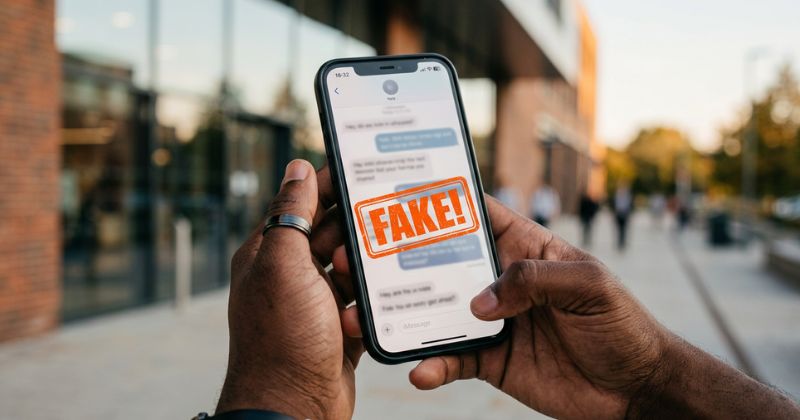
The SMS Spoofing Threat: A Closer Look
One particularly illustrative case highlighted by Venture Labs involved a victim who lost R187 000 after receiving what appeared on the surface to be a completely legitimate SMS message sent directly from their bank. The case demonstrates exactly how convincing these attacks have become and why even experienced digital banking users are being caught out.
De Vos explained that fraudsters are making use of relatively inexpensive services that allow them to send large volumes of SMS messages while simultaneously spoofing trusted sender identities, essentially making their fraudulent messages appear to originate from a bank or other trusted institution. These services have become widely accessible, functioning almost like subscription-based tools that grant criminals bulk SMS capability with spoofing functionality built in.
SMS spoofing has been technically possible since the early 2000s, but the commercial availability of bulk spoofing platforms has made it accessible to a far wider range of criminal operators who previously would not have had the technical capability to carry out such attacks.
Because fraudulent messages often appear within the very same SMS conversation thread as genuine banking notifications from the institution being impersonated, consumers are far more likely to place trust in the message and act on its instructions without questioning its authenticity.
A Flaw in the Network, Not the Bank
De Vos was careful to point out that the vulnerability being exploited in SMS spoofing attacks does not originate within the banking systems themselves. Rather, the weakness lies within the SMS infrastructure operated by cellular network providers, a systemic flaw that banks alone are not in a position to fix unilaterally.
He described the situation as one that the industry as a whole is effectively stuck with for the time being, because the weakness is embedded in the cellular network system rather than in any individual bank’s security architecture.
Several countries, including the United Kingdom and Australia, have introduced SMS sender ID registries that prevent unregistered senders from using trusted brand names in their messages. South Africa has not yet implemented a similar national framework, which contributes to the continued effectiveness of SMS spoofing attacks locally.
Conclusion
Digital fraud in South Africa is no longer a fringe threat targeting the careless or uninformed. It is a highly organised, technologically advanced and rapidly growing criminal industry that is costing the country billions of rands each year and affecting consumers across all levels of digital literacy. As fraudsters continue to evolve their methods, embedding themselves into trusted platforms, exploiting SMS infrastructure weaknesses and targeting account logins at unprecedented rates, both consumers and financial institutions must treat vigilance and proactive security measures not as optional extras but as absolute necessities in the modern digital banking landscape.
Fast, uncomplicated, and trustworthy loan comparisons
At Arcadia Finance, you can compare loan offers from multiple lenders with no obligation and free of charge. Get a clear overview of your options and choose the best deal for you.
Fill out our form today to easily compare interest rates from 19 banks and find the right loan for you.