The South African rand has found itself under considerable pressure as the new trading week gets underway, with financial markets actively digesting the latest signals emanating from the United States Federal Reserve while the ongoing conflict in Iran continues to inflict economic damage on emerging market currencies worldwide.
Key Takeaways
- Rand remains volatile and weakened: The rand has lost 4.9% against the dollar since the Iran conflict began, trading around R16.70/$ on Monday, and is expected to stay volatile despite a possible modest recovery later in the week.
- Iran war and oil prices driving broader market stress: With Brent crude at US$111.70 (approximately R1 865) per barrel and Iran threatening the Strait of Hormuz, geopolitical tensions are fuelling safe haven flows into the dollar while pushing South African fuel prices to painful new highs.
- Fuel cost relief is running out: Petrol rose by R3.27 and diesel by R6.19 per litre in May, with further recoveries already building for June – and the halving of National Treasury fuel tax relief set to add R1.50 for petrol and R1.96 for diesel yet more to the burden.
About Arcadia Finance
Apply for a loan with confidence through Arcadia Finance. With no application fees and 19 trusted NCR-compliant lenders to choose from, you can enjoy a smooth process and financial solutions tailored to you.
The Rand Faces a Difficult Start to the Week
According to Investec Chief Economist Annabel Bishop, financial markets are currently not pricing in any US interest rate hikes for the remainder of this year; however, there is a marked and palpable sense of pessimism being projected by the Federal Reserve in its communications with markets.
The US Federal Reserve, often referred to simply as “the Fed,” was established in 1913 and serves as the central banking system of the United States. Its interest rate decisions ripple across global markets, particularly affecting emerging market currencies like the rand.
Bishop highlighted that elevated US interest rates tend to exert downward pressure on the rand and other emerging market currencies more broadly, and this dynamic is also observed with commodity-linked currencies – a category into which the rand firmly falls given South Africa’s status as a major commodity exporter.

Rand Performance: Quarter-on-Quarter Comparison
While the rand has averaged R16.57 to the dollar so far in the second quarter of the year, this represents a noticeable deterioration from the R16.35 per dollar average recorded during the first quarter. Bishop cautioned that the currency unit is likely to remain highly volatile in the weeks ahead.
| Period | Average Rand/Dollar Rate |
|---|---|
| Q1 2025 | R16.35/$ |
| Q2 2025 (to date) | R16.57/$ |
| Monday opening | ~R16.70/$ |
When tracking currency volatility, economists often look at the “trade-weighted exchange rate” – a measure of a currency’s value relative to a basket of trading partner currencies, weighted by trade volume. This gives a more complete picture than a single currency pair.
On a more encouraging note, Bishop pointed out that incoming Federal Reserve Chair Kevin Warsh is widely perceived as holding a more dovish stance on monetary policy, and concerns in the market about potential US interest rate hikes have been gradually receding as a result of this sentiment shift.
Bishop indicated that the rand could experience some further recovery during the course of the current week, although any such gains are likely to be modest in nature. She added that the currency remains on course to strengthen towards the end of the year.
The Iran War’s Ongoing Impact on the Rand
A significant concern for the rand is that the US dollar has been on an upward trajectory since the conflict in the Middle East commenced at the end of February. The war, which has endured considerably longer than many market participants and observers had initially hoped, has triggered substantial safe haven flows into the dollar – a phenomenon that has had a direct and measurable negative impact on the rand.
To illustrate the scale of the currency movement:
- The rand has weakened against the US dollar by 4.9% since the beginning of the conflict
- The US dollar itself has strengthened by 4.3% over the same period
- The trade-weighted rand – measured against a basket of currencies – has declined by 4.4% over this timeframe
On Monday, the rand began the new week already on the back foot, trading in the vicinity of R16.70 to the dollar, with broader market uncertainty centred on the evolving state of the United States’ military engagement in Iran.
Strait of Hormuz Tensions Add to Market Anxiety
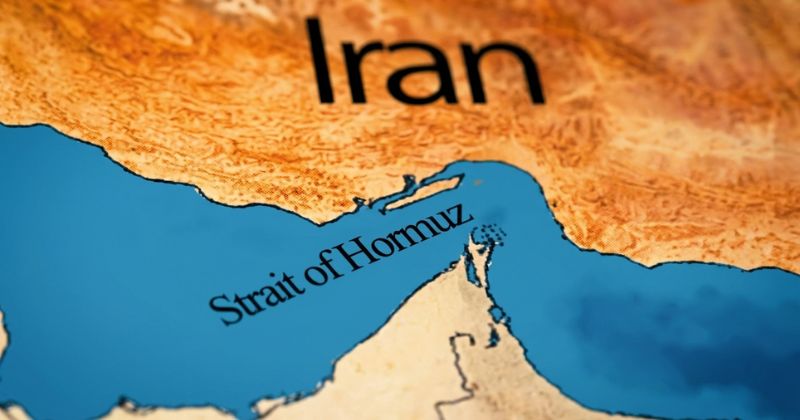
Iranian state media reported over the weekend that attacks had been carried out on US naval vessels, a claim that was subsequently denied by Washington. The situation has escalated further, with Iran moving to assert greater control over the Strait of Hormuz – a strategically critical choke point through which a significant proportion of the world’s oil supply passes – following US President Donald Trump’s announcement that the United States would begin escorting ships uninvolved in the conflict through the waterway from Monday onwards.
The Strait of Hormuz is one of the world’s most strategically important waterways. Approximately 20-21 million barrels of oil pass through it every single day, representing roughly 20% of global oil consumption. Any disruption to shipping through this narrow passage between Iran and Oman can send shockwaves through global energy markets almost instantaneously.
Bishop cautioned that the conflict will continue to make its presence felt across local South African financial markets, with specific impacts expected across several key areas:
- The rand exchange rate – continued volatility as geopolitical risk premiums remain elevated
- Fuel price trajectories – ongoing recoveries driven by elevated global crude oil prices
- Reserve Bank interest rate projections – the South African Reserve Bank’s Forward Rate Agreements are currently pricing in three 25-basis-point rate hikes
Bishop noted that markets continue to hold onto hope that a ceasefire might eventually hold, but acknowledged that significant concerns persist. These concerns are reflected in the Brent crude oil price, which stands at US$111.70 (approximately R1 865) per barrel – a level that has significant downstream consequences for South African consumers.

Fuel Prices: Pain at the Pumps Deepens
The elevated oil price is a matter of acute concern for South African households and businesses alike. The Department of Petroleum and Mineral Resources has confirmed yet another significant petrol and diesel price increase that took effect this week, representing a continuation of the price escalation trend driven by global oil market dynamics.
The official increases announced for May are as follows:
- Petrol: Rising by R3.27 per litre
- Diesel: Rising by R6.19 per litre
June Could Bring Even More Pain
Early fuel price recovery data from the Central Energy Fund (CEF) is already pointing to a negative start for the month of June, with further upward pressure building in the pipeline. The preliminary figures indicate:
- Petrol price recoveries of over R2.00 per litre already accumulating
- Diesel price recoveries of approximately 85 cents per litre
Should these recovery levels persist and continue accumulating for the remainder of the month, motorists across the country could be facing additional and substantial pain at the filling station in June – on top of the already significant increases already digested in May.
Tax Relief Set to Be Halved
Adding further weight to an already difficult outlook, fuel tax relief provided by the National Treasury is set to be halved when the June adjustments come into effect. This change will add:
- R1.50 per litre back onto the price of petrol
- R1.96 per litre back onto the price of diesel
The combination of ongoing geopolitical pressure from the Iran conflict, a structurally weaker rand, elevated global crude oil prices, and the unwinding of temporary tax relief measures paints a challenging picture for South African consumers and businesses heading into the middle of 2025.
Conclusion
The South African rand finds itself caught in a difficult confluence of pressures – a persistently hawkish Federal Reserve tone, a prolonged Middle Eastern conflict that shows little sign of resolution, and a domestic fuel price environment that is rapidly becoming one of the most acute cost-of-living concerns for ordinary South Africans. While there are glimmers of hope in the form of an incoming Fed Chair perceived as more dovish and the possibility of modest rand recovery towards year-end, the short-term outlook remains decidedly uncomfortable, with R16.70/$ likely not the ceiling if geopolitical tensions escalate further, oil prices remain elevated above US$111.70 (approximately R1 865) per barrel, and the full weight of June’s fuel tax relief withdrawal lands on consumers already stretched thin by months of rising costs.
Fast, uncomplicated, and trustworthy loan comparisons
At Arcadia Finance, you can compare loan offers from multiple lenders with no obligation and free of charge. Get a clear overview of your options and choose the best deal for you.
Fill out our form today to easily compare interest rates from 19 banks and find the right loan for you.