
More than 10 million applications for the Social Relief of Distress (SRD) grant were declined in the 2025/26 financial year, with the government citing income levels, alternative financial support, and verification failures as the main reasons. It remains one of the country’s largest forms of temporary income assistance, with millions of unemployed South Africans relying on the monthly payout.
Key Takeaways
- Low approval rate: Only 43.5% of the 18,017,250 SRD applications received in 2025/26 were approved, with over 10 million rejected mainly due to income thresholds, alternative financial support, or verification failures.
- Appeals are available: Rejected applicants can lodge an appeal with the Independent Tribunal for Social Assistance Appeals within 90 days, and the process has moved online for easier tracking.
- Bigger changes ahead: Government is developing a Basic Income Support policy to offer a more predictable safety net, positioned as a complement to the temporary SRD grant rather than a replacement for job creation.
About Arcadia Finance
Get the loan you need, hassle-free. Arcadia Finance connects you with 19 trusted lenders, all NCR-compliant, with zero application fees and a simple, streamlined process built around your financial needs.
Overview Of The Latest Figures
Based on a parliamentary response supplied by then Acting Social Development Minister Sindisiwe Chikunga, a total of 18,017,250 applications for the Covid-19 SRD grant were lodged and received throughout the period being reviewed.
Out of this enormous number, only 7,842,041 applications ended up being approved, which works out to roughly 43.5 percent of the overall total of applications submitted.
Applications At A Glance
| Category | Figure | Percentage of Total |
|---|---|---|
| Total applications received | 18,017,250 | 100% |
| Applications approved | 7,842,041 | 43.5% |
| Applications not approved | 10,175,209 | 56.5% |
If you have applied for the SRD grant, you can check your application status directly through the official SRD WhatsApp line, the SASSA website, or the SRD status check portal, rather than waiting for a physical notification, which can often take much longer to arrive.
This particular response was furnished following a question raised by Inkatha Freedom Party (IFP) Member of Parliament Busaphi Machi, who had enquired of the department regarding the total number of applications that had been received, the corresponding approval rates, the reasons behind rejected applications, the appeals process, and what measures were being implemented to cut down on delays.
Chikunga stated that the number of unsuccessful applications ought to be understood within its proper context, explaining that it was reflective of an ongoing and sustained demand for temporary financial assistance rather than being evidence that people were somehow being barred from accessing the relief on offer.
According to Chikunga, it was important to place these figures within their proper context, and she went on to add that the sheer volume of applications was indicative of sustained demand for temporary income support coming from individuals who either meet, or who are attempting to meet, the eligibility criteria that have been set out.
She further explained that the SRD grant was never intended to function as a permanent social grant, but rather exists as a temporary relief measure designed for people who are in need of immediate assistance in terms of the Social Assistance Act.
Chikunga noted that the substantial number of applicants lines up closely with prevailing unemployment trends across the country, and this is particularly true amongst the younger population of working age.
She remarked that the considerable number of applicants correlates with data drawn from the Stats SA Quarterly Labour Force Survey, which she said continues to demonstrate the existence of an unemployment crisis, one that is especially pronounced amongst young people of working age.

Why Were So Many Applications Rejected?
The SRD grant operates on a means-tested basis, meaning that applicants are required to satisfy certain income thresholds along with other eligibility conditions before their applications can be approved.
The government indicated that the most frequently cited reasons behind rejected applications included instances where applicants had exceeded the prescribed income threshold, cases where applicants already had access to alternative sources of financial support, situations where applicants were already receiving other forms of social assistance or benefits covering the same period, and problems relating to identity verification.
Common Grounds For Rejection
- Applicants exceeding the prescribed income threshold set out in the eligibility criteria
- Applicants who already have access to alternative sources of financial support
- Applicants who are simultaneously receiving other social assistance or benefits for the same period
- Difficulties or failures relating to identity verification
- Applications submitted with incomplete, inaccurate, or unverifiable information
Double-checking that your banking details, ID number, and contact information are entered correctly before submitting an application can significantly reduce the likelihood of rejection due to verification errors, which remains one of the most common and most easily avoidable reasons for a declined application.
Applications that contained information that was incomplete, inaccurate, or simply unverifiable were similarly not given approval.
The department explained that every single application undergoes assessment by way of a digital verification process, during which the applicant’s information is cross-checked against a range of relevant government and financial databases before any final outcome is issued.
It was stated that this particular process has been put in place with the intention of ensuring that assistance reaches those applicants who genuinely qualify for it, whilst simultaneously safeguarding the overall integrity of the social assistance system as a whole.
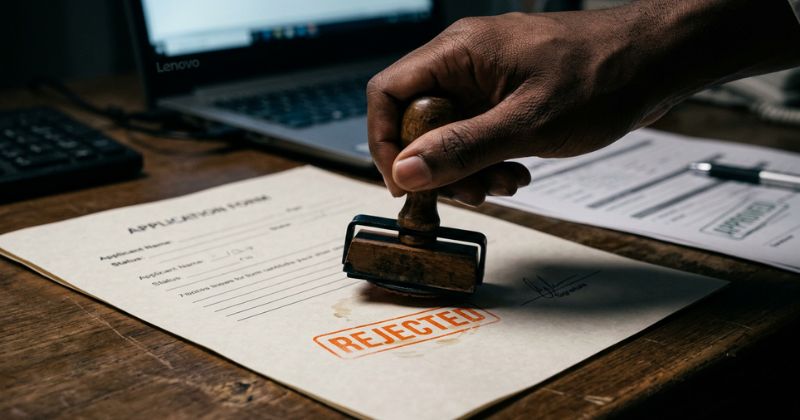
Rejected Applicants Can Lodge An Appeal
Applicants who find themselves in disagreement with a rejection decision retain the right to lodge a formal appeal with the Independent Tribunal for Social Assistance Appeals, and this must be done within a window of 90 days.
The Tribunal is empowered to reassess decisions on the basis of the information that was available at the time the original application was made, and it may either confirm the original decision that was reached or alternatively set that decision aside entirely.
Chikunga explained that the appeals process itself has also been shifted online, which now allows applicants the ability to both submit and keep track of their appeals through digital means.
According to the response provided, these digital platforms make it possible for applicants who remain dissatisfied with the outcomes of their applications to lodge appeals in a way that is both efficient and easily accessible.
The department went on to state that the introduction of digital systems has helped to reduce the need for physical intervention whilst also improving overall access for applicants, a benefit that has been particularly noticeable for those situated in remote and underserved areas of the country.
Steps Being Taken To Reduce Delays
The Department of Social Development confirmed that it has taken a number of concrete steps aimed at improving turnaround times, both in respect of applications and in respect of appeals.
These particular measures include efforts to improve existing digital systems, along with the strengthening of automated data verification processes, all with the aim of reducing the amount of manual intervention required and speeding up the overall decision-making process.
The department stated that the use of integrated electronic platforms, covering both applications and appeals, has made it possible to achieve real-time submission, tracking, and processing of the relevant information.
Measures Introduced By The Department
- Improved digital systems for handling applications and appeals
- Strengthened automated data verification processes to minimise manual intervention
- Integrated electronic platforms enabling real-time submission and tracking
- Reduced reliance on physical intervention, improving access for remote and underserved communities
The government indicated that these various measures have been designed with the intention of cutting down on administrative backlogs whilst also improving the overall efficiency with which the system as a whole operates.

Government Looks Beyond The SRD Grant
The continued and sustained demand for SRD support arrives at a time when the government is working towards a proposed Basic Income Support (BIS) policy, one that is aimed at establishing a more predictable form of income support catering to working-age South Africans who find themselves in need of assistance.
Chikunga stated that the SRD grant has played a role in shielding millions of South Africans from falling into extreme poverty, whilst simultaneously allowing a number of recipients the opportunity to search for employment or to pursue other income-generating opportunities in the meantime.
She went on to say that the grant remains, first and foremost, a temporary relief measure, and that it does not offer the kind of long-term safety net that is genuinely needed by the large number of unemployed South Africans across the country.
According to Chikunga, within the current environment of low and, in some instances, even negative economic growth, the need for a predictable and reliable safety net has become increasingly urgent, and it is for this reason that the proposed Basic Income Support policy has been built upon the demonstrated developmental benefits already shown by existing grants, including the SRD grant itself.
Basic Income Support proposals of this kind have been implemented, in various forms, in countries such as Brazil, India, and several European nations, often being credited with reducing extreme poverty, though debates around their long-term affordability and impact on labour market participation continue amongst economists.
Chikunga clarified that the Basic Income Support policy would not serve as a replacement for job creation efforts, but would instead act as a complementary measure designed to work alongside efforts aimed at connecting recipients with genuine economic opportunities.
She emphasised that the policy is meant to be understood as a complementary intervention, one that links recipients to income-generating and sustainable livelihood opportunities through deliberate labour market facilitation, thereby moving recipients closer towards the labour market whilst supporting inclusion, dignity, and long-term human development.
At A Glance: The SRD Grant Today
- Current monthly payment: R370
- Extended until: 31 March 2027
- Nature of the grant: Temporary relief, not a permanent social grant
- Governed by: The Social Assistance Act
- Appeals body: Independent Tribunal for Social Assistance Appeals
- Appeal window: 90 days from the date of the rejection decision
The SRD grant is currently paid out at a rate of R370 per month, and it has been extended so that it will now remain in place until 31 March 2027.

Conclusion
The high number of rejected SRD applications reflects the scale of unemployment and financial hardship across South Africa rather than deliberate exclusion, with the grant’s means-tested design ensuring that assistance reaches only those who meet the prescribed criteria. While the appeals process and improved digital systems offer rejected applicants a fair route to have their cases reconsidered, the SRD grant remains a temporary measure rather than a lasting solution. As government moves forward with the proposed Basic Income Support policy, the aim is to build on the SRD’s benefits and provide a more predictable, reliable safety net that works alongside efforts to connect people with genuine economic opportunities.
Fast, uncomplicated, and trustworthy loan comparisons
At Arcadia Finance, you can compare loan offers from multiple lenders with no obligation and free of charge. Get a clear overview of your options and choose the best deal for you.
Fill out our form today to easily compare interest rates from 19 banks and find the right loan for you.