
South Africans who rely on banking applications on their mobile phones are confronting an escalating danger of fraud, as digital banking crime has become recognised as one of the most serious financial crime threats of 2025.
Key Takeaways
- Digital banking crime is accelerating fast: Client claims reached R2.41 billion in 2025, up 29.2% from 2024, with incidents climbing to 110,074 cases and average losses rising to R21 865.
- Banking apps are the main battleground, not the point of failure: Nearly 89% of cases ran through banking apps, yet SABRIC confirms the apps weren’t compromised. Fraud usually starts outside the platform through impersonation and urgency tactics, with the app only used afterwards to move stolen funds.
- Scam tactics are getting more sophisticated with AI: Vishing, remote access scams, and AI generated phishing messages, images, and cloned voices are making impersonation harder to detect, while combined credit and debit card losses also rose 18% year on year to R1.75 billion.
About Arcadia Finance
Get a loan the easy way with Arcadia Finance. Pay no application fees and choose from 19 trusted lenders, all fully compliant with South Africa’s National Credit Regulator. Enjoy a smooth process and reliable options built around your financial needs.
The Scale Of Digital Banking Crime
Figures released by the South African Banking Risk Information Centre (SABRIC) show that the reported client claim amounts connected to digital banking crime have more than doubled across a three year period.
Total claims climbed to R2.41 billion during 2025, marking an increase of 29.2% when measured against the roughly R1.86 billion that was recorded throughout 2024.
The volume of reported digital crime incidents has likewise continued its upward trajectory, rising from 52,588 cases in 2023, to 97,547 cases in 2024, before reaching 110,074 cases in 2025.
Meanwhile, the average financial loss suffered per incident stood at R21 865 in the most recent year, an increase from R19 095 in 2024 and R20 649 in 2023.
Quick Snapshot
- Total digital banking crime claims in 2025: R2.41 billion
- Increase in claims compared to 2024: 29.2%
- Reported incidents in 2025: 110,074
- Average loss per incident in 2025: R21 865
Financial experts generally recommend reviewing your bank statements at least once a week rather than once a month, since catching a fraudulent transaction within hours dramatically increases the chances of recovering the funds before they are moved further.
Banking Apps Remain The Primary Channel
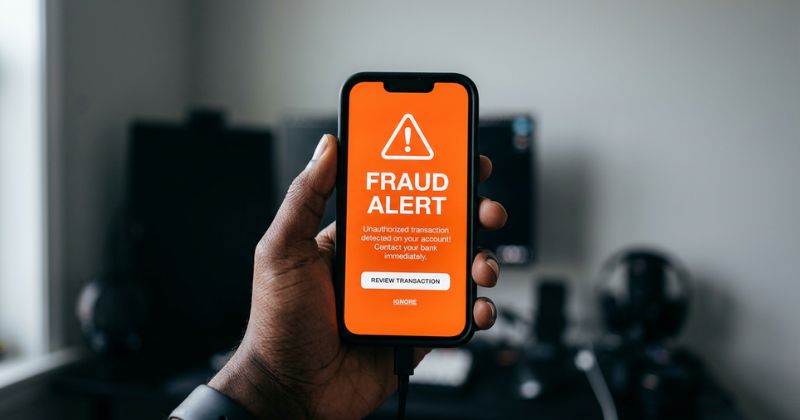
Banking applications have emerged as by far the largest channel implicated in digital banking crime. SABRIC documented 97,555 banking-app related client-claim investigations throughout 2025, which represents 88.6% of the total number of digital banking crime cases recorded.
The monetary claims linked to these particular cases reached R1.70 billion, equivalent to 70.5% of the overall total claimed.
SABRIC clarified that the banking application being the primary channel for digital banking crime in 2025 does not imply that the banking applications themselves or the underlying bank systems had been compromised in any way.
Instead, the organisation explained that in a large number of instances, the fraudulent activity actually began outside of the banking platform entirely, at the point when criminals impersonated trusted institutions, manufactured a sense of urgency, or walked victims through transactions in real time as they were taking place.
The banking application itself is then used by the victim, under the criminal’s direction, to add new beneficiaries, approve payments, or transfer funds only after the customer had already been misled and manipulated into acting.
Vishing Remains A Major Method Of Attack
Voice-phishing, more commonly referred to as vishing, has continued to be a significant method used by fraudsters. Criminals impersonate representatives of banks, government institutions, or other organisations that consumers naturally trust, and inform victims that their accounts are supposedly at risk or that a suspicious transaction has apparently taken place.
Victims are subsequently persuaded to move their money into what is presented to them as a “safe account”, all while the criminal remains on the telephone line and provides step by step instructions throughout the process.
SABRIC noted that these transactions are sometimes executed in rapid succession, including payments directed toward beneficiaries that had only just been created, which leaves victims with very little time to intervene or stop the movement of their money once they have already been deceived.
How Vishing Scams Typically Unfold
- A criminal contacts the victim posing as a bank official or government representative.
- The victim is told there is an urgent problem with their account or a suspicious transaction.
- The criminal creates pressure and urgency, discouraging the victim from hanging up or verifying independently.
- The victim is guided, step by step, to move funds into a so-called safe account.
- Funds are rapidly transferred onward, often to newly created beneficiaries.
Legitimate banks will never ask you to move your money into a different account for “safekeeping”. If you receive such an instruction, it is a strong indicator of fraud, and you should hang up and contact your bank directly using the number printed on your card.

Fraud Remains Widespread Across South Africa
Remote Access Scams
Remote-access scams have also stood out as a particularly prominent threat during this period. Victims are persuaded to install certain software or to activate screen sharing functions on their devices, under the false pretence that they are receiving technical support, fraud-prevention assistance, or account verification services.
SABRIC reported that once control of the device had been obtained by the criminal, funds were typically transferred through a single decisive transaction directed to a newly created beneficiary, and this often occurred immediately after access to the device had been granted.
Remote access scams often exploit legitimate remote desktop software, such as tools originally designed for IT helpdesks, which is part of why they can appear so convincing to victims who assume only “real” technicians would use such programmes.
The Growing Role Of Artificial Intelligence
The organisation additionally warned that artificial intelligence has the potential to make impersonation scams considerably more convincing than they have been in the past.
Criminals are increasingly capable of producing polished phishing messages, realistic-looking images, and believable voice recordings with the assistance of AI tools. SABRIC further noted that isolated cases involving cloned voices had also been reported.
Internet Banking And Mobile Channels
Internet banking accounted for a comparatively smaller share of digital banking investigations, at only 8.5% of the total, yet the 9,354 cases recorded under this channel still resulted in R688.3 million worth of claims, representing 28.6% of the overall total.
Mobile banking conducted through USSD and standard cellphone channels accounted for 3,165 investigations, which together resulted in R22 million in claims.
The Wider Fraud Picture
The broader fraud landscape in South Africa also gives cause for concern. Combined gross losses recorded on South African-issued credit and debit cards increased by 18% on a year-on-year basis, climbing from R1.48 billion in 2024 to R1.75 billion in 2025.
Losses attributed specifically to credit cards rose by 29.3%, reaching R739.2 million, while losses attributed to debit cards increased by 10.9%, reaching R1.01 billion.
Full Breakdown Of Reported Figures
| Category | Specific Measure | 2024 | 2025 | Year-on-Year Change |
|---|---|---|---|---|
| Digital Banking Crime | Total Client Claim Amount (Gross Loss) | R1 862 633 862 | R2 406 728 972 | +29.2% |
| Digital Banking Crime | Reported Incidents / Investigations | 97,547 | 110,074 | +12.8% |
| Digital Banking Crime | Average Loss per Incident | R19 095 | R21 865 | +14.5% |
| Card Fraud (Gross Losses) | Combined Credit & Debit Card Losses | R1 479 082 576 | R1 745 352 519 | +18.0% |
| Card Fraud (Gross Losses) | Credit Card Fraud Losses | R571 805 478 | R739 234 011 | +29.3% |
| Card Fraud (Gross Losses) | Debit Card Fraud Losses | R907 277 098 | R1 006 118 508 | +10.9% |
| Card Fraud (Gross Losses) | Domestic Card Losses (SA transactions) | R598 056 523 | R857 459 174 | +43.3% |
| Card Fraud Sub-Types | Card Not Present (Credit Card) | R424.6m* | R402 109,115 | -5.3% |
| Card Fraud Sub-Types | Card Not Present (Debit Card) | R583.1m* | R378 416 008 | -35.1% |
| Card Fraud Sub-Types | Lost and/or Stolen (Credit Card) | R40 511 605 | R34 172 551 | -15.6% |
| Card Fraud Sub-Types | Lost and/or Stolen (Debit Card) | R252 633 375 | R253 002 632 | +0.1% |
| Vehicle Asset Finance (VAF) | Reported Applications / Incidents | 50,885 | 71,747 | +41.0% |
| Vehicle Asset Finance (VAF) | Potential Loss (Declined) | R19.7 billion | R28.3 billion | +43.8% |
| Home / Mortgage Loan Fraud | Reported Applications / Incidents | 4,780 | 4,942 | +3.4% |
| Home / Mortgage Loan Fraud | Potential Loss (Declined) | R6.1 billion | R5.3 billion | -12.3% |
| Home / Mortgage Loan Fraud | Actual Realised Loss | R599.7 million | R595.9 million | -0.6% |
| Unsecured Lending Fraud | Reported Applications / Incidents | 62,367 | 41,148 | -34.0% |
| Unsecured Lending Fraud | Potential Loss (Declined) | R1.6 billion | R1.2 billion | -28.5% |
| Contact Crime: Robbery & Attacks | Associated Robbery Incidents | 414 | 592 | +43.0% |
| Contact Crime: Robbery & Attacks | Associated Robbery Cash Losses | R7 976 439 | R6 236 770 | -21.8% |
| Contact Crime: Robbery & Attacks | ATM Attack Incidents | 301 | 163 | -45.8% |
| Contact Crime: Robbery & Attacks | ATM Attack Cash Losses | R27 688 690 | R10 185 900 | -63.2% |
| Contact Crime: Robbery & Attacks | Bank Burglary Incidents | 27 | 22 | -18.5% |
| Contact Crime: Robbery & Attacks | Bank Burglary Cash Losses | ~R1.5 million | ~R2.2 million | +52.0% |
| Contact Crime: Robbery & Attacks | Bank Robbery Incidents | 8 | 2 | -75.0% |
| Contact Crime: Robbery & Attacks | Bank Robbery Cash Losses | R3 672 357 | R630 000 | -82.8% |
A useful habit is enabling instant push notifications for every transaction on your banking app, no matter how small. This way, if a fraudulent payment goes through, you will know within seconds rather than discovering it days later.

Staying Protected
The following protective checklist was added to help readers apply this information practically:
- Never share One-Time Pins (OTPs), passwords, or card PINs with anyone, including individuals claiming to represent your bank.
- Be suspicious of any call that creates urgency or pressures you to act immediately without time to verify.
- Avoid installing remote access or screen-sharing software at the request of an unsolicited caller.
- Contact your bank directly using the number on the back of your card if you are ever unsure about a call or message.
- Keep your banking app and phone operating system updated, since updates often patch security vulnerabilities.
- Consider setting daily transaction limits on your banking app to reduce potential losses if your account is compromised.
Conclusion
Digital banking crime in South Africa is on a clear upward trend, and the numbers make it plain that criminals are relying less on breaking into bank systems and more on manipulating people directly through impersonation, urgency, and increasingly convincing AI generated deception. As vishing, remote access scams, and card fraud continue to climb alongside these losses, the responsibility for staying safe increasingly falls on individual vigilance, such as verifying calls independently, refusing to share OTPs or PINs, and questioning any request to move money urgently, since these simple habits remain the strongest defence against tactics designed to exploit trust rather than technology.
Fast, uncomplicated, and trustworthy loan comparisons
At Arcadia Finance, you can compare loan offers from multiple lenders with no obligation and free of charge. Get a clear overview of your options and choose the best deal for you.
Fill out our form today to easily compare interest rates from 19 banks and find the right loan for you.